
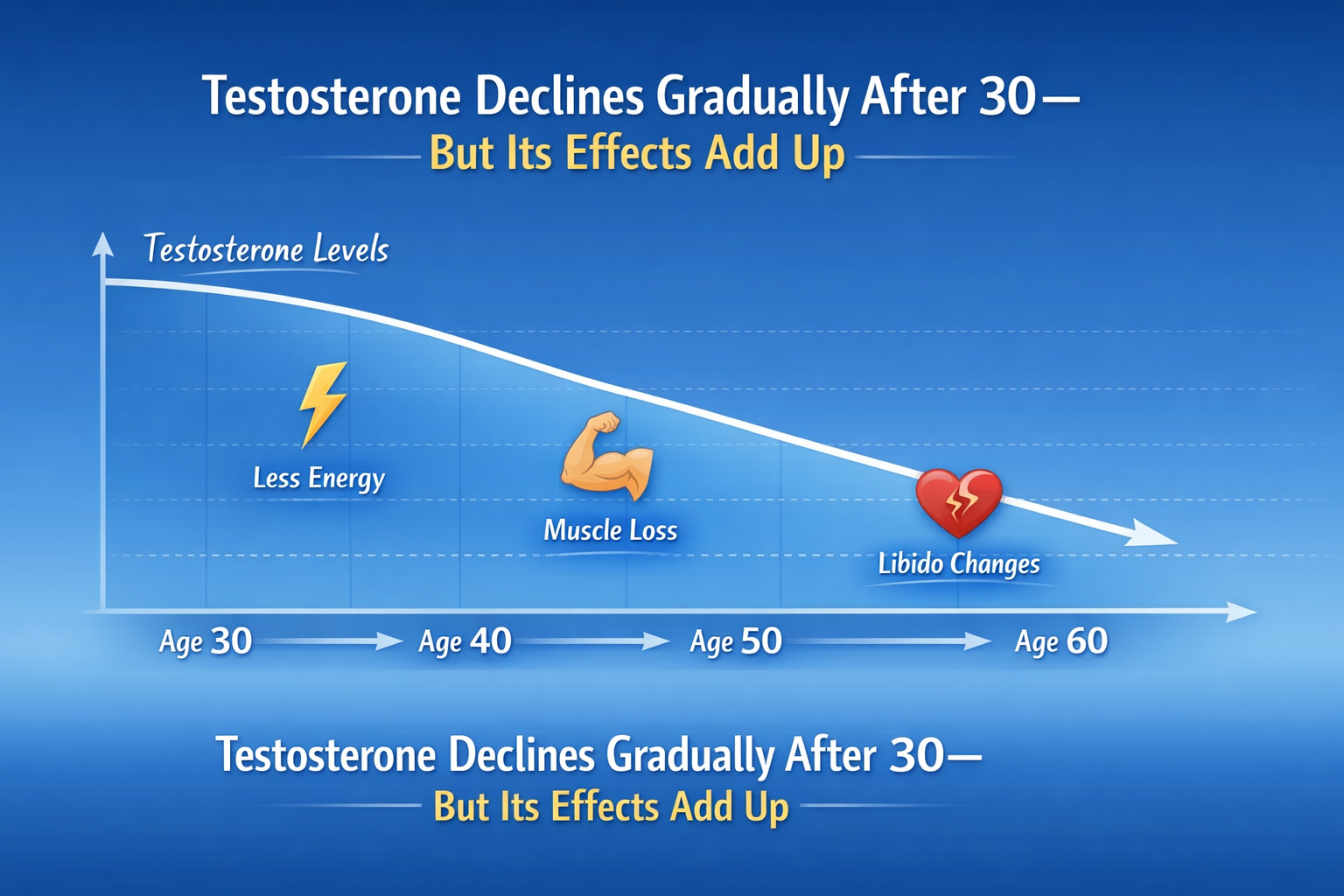

For men after their 30s, testosterone levels do not decrease all at once; rather, there is a continuous decline of approximately 1% each year. While this may not feel significant at first, you will see the impact in years to come.
The decline in testosterone will not be a clear, singular change that you will notice. For example, when there is a slow drop in testosterone levels, you may present with a few subtle changes that are often mistaken for the result of external factors like stress, diet, and aging, so it’s very important to become aware of the new standard for yourself.
By becoming aware of the changes you are experiencing as your testosterone continues to decline as you get older, you will better recognize when you need attention rather than adjusting to your new normal.
How Low Testosterone Shows Itself in Everyday Life
There isn’t exactly one way to define low testosterone; its indicators come in various forms of multiple occurrences over time.
Men tend to experience:
- A slow decrease in libido
- Lower energy levels (despite fully resting)
- Less enthusiastic about daily tasks or not being fully present for those around you
- Decreased ability to sustain your current muscle mass
- Increase in fat, especially around your stomach
- Experiencing different emotions such as anger or low self-esteem
- Decrease in regularity/strength of having an erection
The reason these symptoms can pose a problem is that they can all occur for other reasons associated with normal life experiences. Therefore, many men will not directly associate their symptoms with hormonal changes.
What Low Testosterone Feels Like Physically and Mentally Over Time
When your testosterone levels drop, it won’t mean your body will stop working; it will simply become less productive. On a physical level, you may notice:
- Slower recovery time after workouts
- Decreased strength even after putting in continued effort
- Changes in your body composition
On a mental level, you will see changes as well:
- Less drive or motivation
- Trouble concentrating
- Not feeling like yourself
All of these changes tend to build up slowly. People typically rationalize them as being the normal progression of aging, rather than addressing them.
How Testosterone Decline After 30 Affects Sexual Health and Performance
Testosterone is of major importance concerning sexual function and desire. As a result, if a man’s testosterone levels have dropped, he may notice:
- Less interest in sexual relations
- Fewer spontaneous erections
- Less sexual satisfaction while engaging in sexual activity
Some of this may overlap with the symptoms of erectile dysfunction, but it is of great significance that they mustn’t be viewed as the same.
Understanding the Difference Between Low Testosterone and ED
One of the biggest misconceptions in men’s health is the difference between low testosterone and ED (erectile dysfunction). Both problems may occur at the same time but they are not interchangeable.
- Low levels has an impact on sexual desire and the overall balance of hormones in the male body.
- ED is mainly dependent on adequate blood flow to produce an erection.
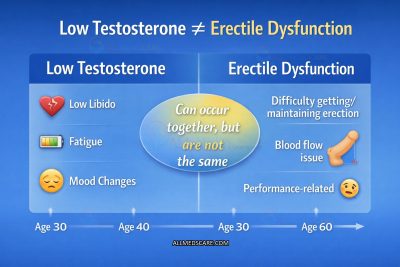
The consequences of these two conditions are significant:
- Some men have normal levels of testosterone but still experience erection issues.
- Some men have low testosterone and can still develop erections.
- When a man has erectile dysfunction the treatment may involve medication to improve blood flow in addition to testosterone replacement therapy.
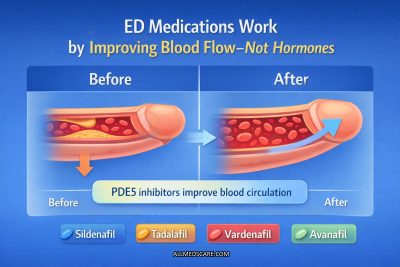
In most cases, the medications commonly prescribed for ED are in addition to therapy and they primarily work to enhance blood flow for experiencing a satisfying sexual activity. They are frequently preferred due to their very quick action time.
Commonly prescribed Erectile Dysfunction medications include:
- Sildenafil (e.g., Viagra, Cenforce, Kamagra): Fast acting for short term use just before sexual activity
- Tadalafil (e.g., Cialis, Vidalista, Tadalis): Longer duration of action than other ED medications offering more spontaneity for longer periods of time
- Vardenafil (e.g., Levitra, Vilitra): Very similar to the action of sildenafil but also can be a good option for some men who respond continually after its use
- Avanafil (e.g., Stendra, Avaforce): A newer medication with a faster onset of action and with less time constraints compared to other ED medications
What Causes Testosterone Decline After 30 Faster Than It Should?
While aging contributes to a decline in testosterone, an unhealthy lifestyle contributes to testosterone decline even further.
Areas of lifestyle that can contribute to low testosterone are:
- Chronic Stress – Increases in cortisol will cause a decrease
- Poor Sleep Quality or Irregular Sleep Patterns
- Lack of Exercise, Especially Resistance Training
- Alcohol Abuse
- Smoking
- Weight Gain and Poor Eating Habits
These areas of lifestyle not only affect levels, but will also harm your overall health and sexual performance.
When Low Testosterone Becomes a Medical Concern?
Not all symptoms that indicate low testosterone need to be treated.
Here are situations where you should seek medical care:
- The symptoms have lasted more than a couple of months.
- There is a significant decrease in your sex drive.
- Even with lifestyle changes, you don’t have energy or motivation.
- Erection problems are becoming more common.
- Your quality of life is decreasing.
The only way to definitively determine if you have low testosterone is through a blood test.
Natural Ways to Support Healthy Testosterone Levels After 30
You can make many changes before looking at traditional medical treatment to improve how your body functions.
- Consistent Physical Activity: Regular physical activity, especially strength training, can help improve your hormone production and increase your overall health.
- Quality Sleep: Sleep has a close connection to testosterone production. If you do not sleep well consistently, you will lose levels over time.
- Balanced Nutrition: Eating a balance of protein, healthy fats and nutrients is the best way to keep your hormones balanced.
- Stress Management: Chronic stress can have a major impact on how you regulate your hormones. Learning how to manage your stress is not an option, it is essential for your health.
- Maintaining a Healthy Weight: Your levels are directly related to the amount of excess body fat you are carrying around.
Treatment Options for Testosterone Decline After 30
For individuals whose levels are markedly low, a doctor may recommend one or more of the following treatment options for low levels:
- Hormone Replacement Therapy (HRT) may be prescribed to bring a person’s hormonal levels back into balance, usually helping with libido, energy, and overall well-being, provided proper testing and monitoring by a physician.
- Medications to help alleviate low testosterone related symptoms may be prescribed. For example, for patients with ED, medications like Sildenafil, Tadalafil, Vardenafil, or Avanafil may be given to help promote blood flow and improve the quality of their erections.
- Combination treatments that combine medication with lifestyle changes (better sleep, exercise, nutrition, and managing stress) generally have had the greatest success.
However, the patient is treated on the basis of overall individual health rather than just his age.
Why Treating Testosterone Decline After 30 Alone May Not Solve Everything
Many men believe that restoring their testosterone will address all related symptoms (particularly sexual symptoms).
The truth is:
- While testosterone may improve libido and energy
- The quality of an erection is dependent upon other factors as well (such as blood flow)
Because of this, a lot of men will need a combination of treatments to address both hormone levels and vascular issues.
Not recognizing this differentiation can create unrealistic expectations, as well as poor results.
What This Means for Men Facing Testosterone Decline After 30
Decline After 30 is a very normal part of a person’s lifespan. However the changes you experience aren’t always ensured and this is where managing low testosterone levels becomes very important.
Some men will remain unaffected by any kind of change for a long time, but other men will have noticeable changes in their energy, mood, and libido level. The variations can generally be attributed to how you perceive the decline in your levels, your health habits, and getting treatment in a timely manner.
Testosterone is just part of your overall biology, so you will not solve complex issues with a hormonal treatment.
However, you can accomplish the following:
- Continue to have an adequate amount of energy and be motivated.
- Help maintain a well-functioning sexual life.
- Prevent minor changes from developing into more serious issues.
It’s important not to overlook the symptoms of low testosterone, but at the same time, it’s important to avoid oversimplifying the symptoms.

About John Davis
Healthcare Writer & Medical Content Author
John Davis is a content creator in healthcare with a career at AllMedsCare that consists of writing articles with knowledge for patients on pharmaceutical topics, health issues related to men and women’s health, sexual health during pregnancy, procedures, exercising, and... Read More
View all posts by John Davis


