
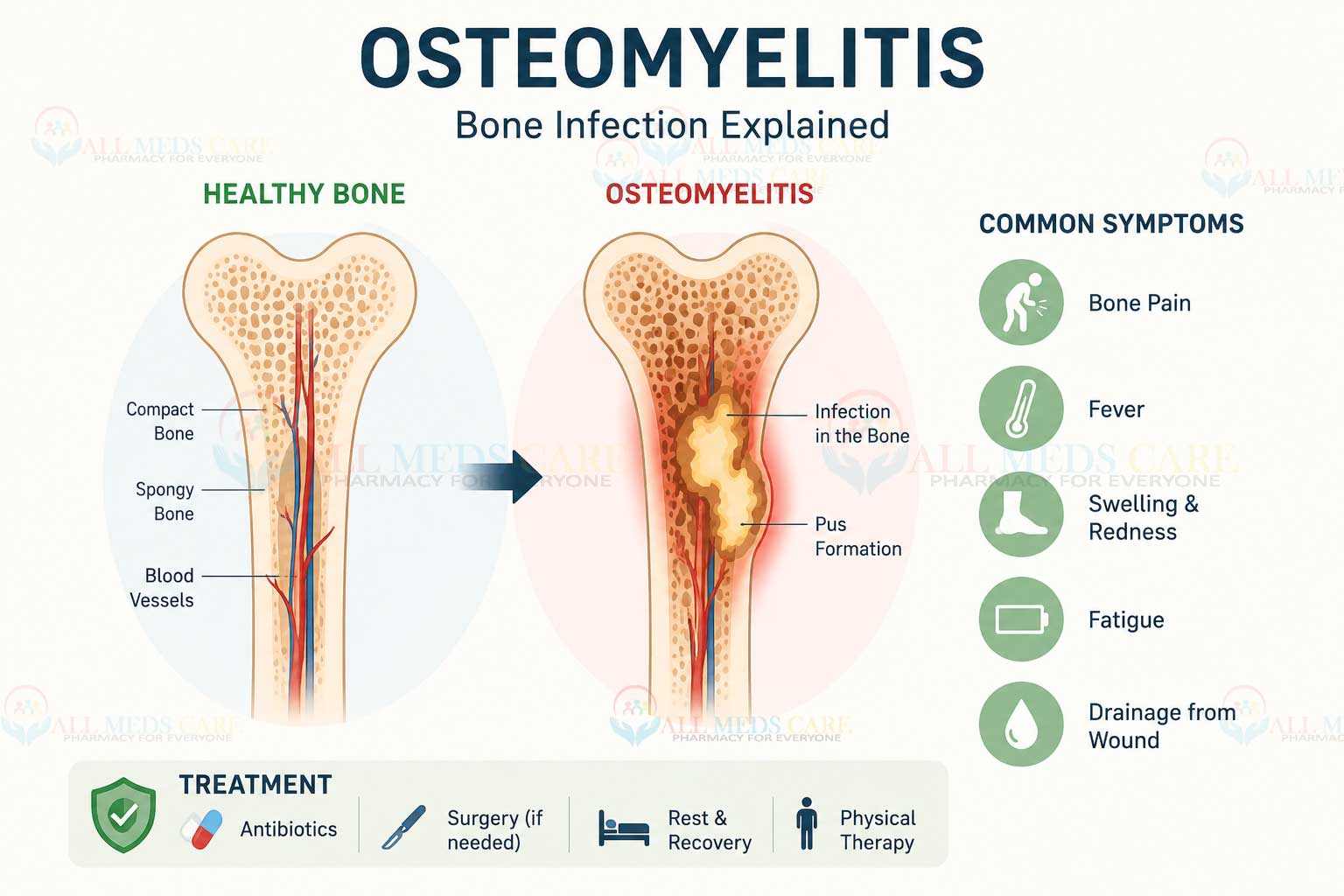
What Causes Osteomyelitis? Risk Factors, Symptoms, and Recovery
Osteomyelitis is a severe infection that can occur in patients of any age, but is rare. If untreated, it can have major effects on the patient. Inflammation and destruction of bone can occur as a result of bacterial or fungal infections, which may enter the tissues from the blood supply, from an injury to the area, or following surgery; however, bones are rarely the site of infection. It is important to understand the causes of osteomyelitis along with its risk factors, symptoms, and recovery time to facilitate an accurate diagnosis and timely treatment for someone with the disease.
What Is Osteomyelitis?
An osteomyelitis infection is characterized as a bone infection and is primarily caused by bacteria (sometimes by fungus). Osteomyelitis can occur at any bone in the body; however, long bones, located in the extremities of the body (arms, legs, etc) in children, and either the spinal column or the pelvis and feet in adults are the most commonly infected bones.
Osteomyelitis may present itself suddenly (acute) or may be a chronic problem lasting from months to years. Therefore, patients must get evaluated as soon as possible because if not treated promptly, the infection may cause a lack of vascular supply to that area, hence leading to death of all the bones in that area, and this damage will be irreversible.
What Causes Osteomyelitis?
Infection with bacteria is the most common cause of osteomyelitis. Several bacteria can cause the problem, the most common being Staphylococcus aureus. This bacterium usually lives on the skin and in the nose, but can cause infection if it gets into the body through cuts and punctures or procedures such as surgery and injections.
1. Infection Through the Bloodstream
Osteomyelitis can spread in the blood to the bone (hematogenous spread) via one of the most common routes of transmission. This is especially frequent in children where the bones are growing, as this is a site with abundant blood vessels which may be able to trap circulating bacteria.
Bloodstream infections may originate from:
- Skin infections
- Respiratory infections
- Urinary tract infections
- Dental infections
When the microorganisms get into the bone, they multiply and cause inflammation.
2. Direct Bone Exposure Due to Injury
Injuries may be so severe that they allow exposure of bones to harmful microorganisms. Open fractures, deep cuts or puncture wounds can be a direct route for bacteria to gain access into the bone tissue.
Osteomyelitis can also be caused by traumatic injuries such as:
- Compound fractures
- Deep animal bites
- Penetrating injuries from sharp objects
- Crush injuries
In these circumstances, contamination and infection are likely to occur.
3. Surgical Procedures
While it is very safe to undergo surgery, any bone surgery does have a small risk of infection. In some orthopedic surgical procedures, such as joint replacement surgery and fracture repair, bacteria can be introduced into the bone tissue.
Sometimes, medical devices like screws, plates and prostheses may be places where bacteria can multiply, especially when the immune system is compromised.
4. Chronic Wounds and Ulcers
Individuals who develop wounds that do not heal quickly are more at risk for developing osteomyelitis. Diabetic foot ulcers are just one of the most frequently seen examples. If a wound is left open for a longer period of time, bacteria can slowly penetrate deeper into the tissues and ultimately into the bone.
It is very common in the feet due to poor blood flow, which makes it difficult to heal such an infection.
Risk Factors for Osteomyelitis
Some medical diseases and lifestyle habits may make it more likely to get osteomyelitis.
Diabetes
One of the highest risk factors is diabetes. Wounds take longer to heal, and blood vessels and nerves are damaged because of high blood sugar. Proper healing of foot ulcers can be hindered, and lead to infection in the underlying bone.
Weakened Immune System
People with impaired immune systems do not have as strong a defence against infections. Those conditions and treatments that weaken the immune system include:
- HIV/AIDS
- Cancer treatments
- Organ transplantation
- Long-term steroid use
- Autoimmune diseases
Poor Blood Circulation
Slower blood flow means fewer blood-borne cells and nutrients can reach tissues to fight infection. Some conditions are associated with poor circulation:
- Peripheral artery disease
- Smoking-related vascular disease
- Chronic venous insufficiency
Recent Surgery or Trauma
Any injury or surgery that has happened within the past few months can elevate the chances of infection, especially if there is a faulty healing process.
Intravenous Drug Use
Injection drug users can have bacteria from dirty needles injected into their blood. These bacteria may spread to bones and other organs where they can lead to serious infections.
Advanced Age
Elderly people may have a diminished immune system and other pre-existing health conditions that can make them more vulnerable to bone infections.
Symptoms of Osteomyelitis
The symptoms may be different depending upon the severity and site of infection. Acute osteomyelitis can be a quick-onset process, and chronic osteomyelitis can be a gradual process.
Common symptoms include:
Localized Bone Pain
One of the earliest signs and most common is persistent pain near the infected bone. The pain can get worse over time, and may eventually be so bad that it makes everyday activities difficult.
Swelling and Redness
The affected area can be swollen, hot and tender. At times, one can see redness over the affected area.
Fever and Chills
A wide variety of systemic symptoms are found in many patients:
- Fever
- Chills
- Fatigue
- General malaise
These symptoms indicate the body’s response to infection.
Limited Movement
Infections near joints can make movement painful and difficult. Individuals may avoid using the affected limb or experience stiffness.
Drainage From the Skin
Chronic osteomyelitis can have openings in the skin, called sinus tracts, through which pus can drain. This symptom may be due to a chronic infection that needs specific treatment.
How Osteomyelitis Is Diagnosed?
Osteomyelitis is confirmed with a combination of a doctor’s diagnosis and the results of diagnostic tests.
Common diagnostic methods include:
- Blood tests to identify infection markers
- X-rays to detect bone damage
- MRI scans for detailed imaging
- CT scans in selected cases
- Biopsies of bone to help determine which organism is present to cause infection
- A precise diagnosis enables health care providers to select the best treatment option.
Treatment and Recovery
The recovery from osteomyelitis depends on the early diagnosis and treatment.
Antibiotic Therapy
Most bacterial infections will need to be treated with antibiotics for several weeks. Treatment may be through intravenous drug therapy and then oral antibiotics like generic Cipro.
Which antibiotic is used will be determined by the bacteria identified by testing.
Surgical Treatment
Surgery might be required if:
- Dead bone tissue is present
- Abscesses develop
- Medical devices become infected
- Antibiotics alone are ineffective
This might include draining pus, removing infected tissue and/or restoring blood supply to the affected area.
Managing Underlying Conditions
Treating contributing conditions, such as diabetes and circulatory problems, is essential for preventing recurrence.
Patients are often advised to:
- Maintain healthy blood sugar levels
- Stop smoking
- Follow proper wound care practices
- Attend regular medical follow-ups
Recovery Outlook
Recovery times vary depending on the severity of infection, overall health, and treatment response. Acute osteomyelitis often responds well to early intervention, with many patients recovering fully within several weeks to months.
Chronic osteomyelitis can be more challenging and may require long-term monitoring. However, advances in antibiotics, surgical techniques, and wound care have significantly improved outcomes.