
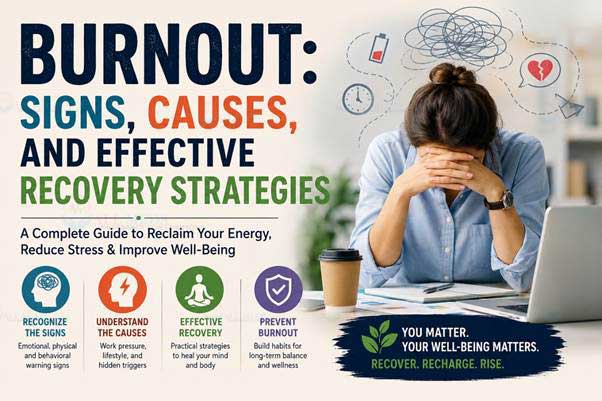
Burnout: Signs, Causes, and Effective Recovery Strategies

Feeling Exhausted All the Time? It Might Be More Than Stress
You were able to sleep through the night. You’re holding a cup of coffee in your hand. You have ticked a couple of items from your list of things to do. But you still feel drained, detached and exhausted mentally, emotionally and physically.
If you may have heard of this, you may have burned out.
Burnout is one of the most prevalent health issues for workers, students, caregivers and professionals all over. Many go about their lives without heeding the early signs and symptoms until they develop symptoms of mental and physical strain.
Knowing the signs, causes of burnout, and what to do to recover before the burnouts take hold, are also important to gain energy, motivation and well-being before it’s too late.
How can you determine whether you suffer from “Burnout”?
The issue is often hard to recognize due to its slow onset. It is not something that suddenly comes in a flash. Rather, it starts with chronic stress and gradually progresses towards emotional, physical and mental fatigue.
Below are some common ways of describing burnout:
- Frequently feeling fatigued, even after sleep
- Unmotivated to do everyday tasks
- Trying to avoid feeling emotions or being sensitive to others’ emotions
- Less productive than usual
- Overwhelmed by responsibilities
- Annoyed with minor irritations
The fatigue associated with burnout is different from typical fatigue and can make things as basic as breathing feel tiring.
Early Signs of Burnout that you Should Never Ignore.
It’s important to be able to identify the early signs of burnout so you can avoid health issues in the future.
The symptoms are:
- Emotional Exhaustion: May feel fatigued and unfit to cope with everyday life. What used to be simple now seems difficult. Easily obtained tasks now appear to be challenging.
- More Irritability: The little irritations can result in strong emotional reactions. There are plenty of people who get irritated with a co-worker, a family member or a friend.
- Lack of Motivation: Burnout can begin with a lack of interest in work, hobbies and personal aspirations, and is one of the first symptoms.
- Brain fog: One of the common symptoms is difficulty concentrating, remembering things, to make decisions.
Physical Symptoms of Burnout are
Burnout doesn’t just affect your mental health. It can also take its toll on your body.
Some common physical signs are:
- Chronic fatigue
- Frequent headaches
- Muscle tension
- Digestive Diseases
- Sleep disturbances
- Increased susceptibility to illness
- Changes in appetite
Chronic stress can be blamed for these symptoms, and often is when people think it is due to their age or the fast-paced lifestyle.
The Difference Between Burnout and Stress.
Stress and burnout are frequently thought of as being the same, but they are not.
Typically, stress is about an overabundance of responsibilities. Stressful situations can be difficult, but people experiencing stress will stay involved and believe that things will get better.
In contrast, burnout is characterized by emotional exhaustion, detachment and hopelessness. Rather than feeling overwhelmed, they often feel empty, disheartened, and disengaged.
Stress is when you feel “too much”, and burnout is when you feel “nothing left.
What Causes Burnout?
It’s typically not a single incident that leads to burnout, so it is important to remember that. This is usually the result of prolonged stress that is not recovered from.
- Too much work: Work demands that are greater than an individual’s ability to handle are significant stressors in the job and can contribute to work burnout. Trying to work too hard and putting in unrealistic goals will eventually cause the issue.
- Poor Work-Life Balance: As work starts to intrude on private time, there is less opportunity to get rest and recuperation. This imbalance over time can take a serious toll on the likelihood of having burnout.
- Workload/Schedule/Responsibilities: Feeling overwhelmed by workload, schedule, or responsibilities can be a source of frustration and emotional exhaustion.
- Financial Pressure: Many people face continuous stress because of financial worries, debts and increasing living expenses.
- Caregiver Responsibilities: Caregivers are at risk for burnout in particular when caring for their family, and caregivers are typically parents, healthcare providers or anyone else caring for an elderly family member.
- Digital Overload: There is not a lot of time to truly shut off and recharge the brain, as there are constant notifications, emails, social media posts and screen time.
The reasons Why High Achievers are More Burnout Prone.
Interestingly, burnout frequently happens to people who are very adept at their work and have a lot of enthusiasm.
Individuals who have a high threshold for self-care could be more inclined to ignore fatigue and press on regardless. Those with a perfectionist streak, entrepreneurs, healthcare workers and corporate leaders are all at high risk for burnout, as they tend to focus on production over rest.
The very things that make you successful can make you more susceptible to being chronically exhausted: Ambition, dedication, responsibility.
Here are some tips on how to recover?
Fortunately, it’s possible to get over burnout. But it’s not just a day off or more sleep that’s needed for recovery.
For the best results, rest and get some sleep.
One of the most vital weapons to combat burnout is good sleep. Have a regular bedtime and use a sleep routine to promote good sleep.
Set Healthier Boundaries
It can be helpful to set boundaries with others and tell them no to help eliminate stress and extra emotional weariness.
Engage in Physical Activity regularly.
Exercise not only benefits the body, but it is also beneficial for the mind, as it can help reduce the levels of stress hormones and release chemicals that can help lift the mood.
Reconnect with Supportive People – those who support you.
Having a solid support network can be very helpful when dealing with tough times. Acknowledging social isolation by discussing it with trusted friends or family members can help to alleviate the effects of social isolation.
Learn How to Use Stress Management Techniques.
Coping strategies such as Mindfulness, Meditation, Deep breathing exercises and Journaling can help to calm the nervous system and enhance emotional resilience.
Seek Professional Support
If symptoms persist or are affecting functioning, a consultation with a health care provider or mental health worker may be beneficial for advice and support.
So how long does the Recovery Timeline Take?
The question that is asked all the time is, “How long does it take to recover?”
This depends on the extent of the symptoms and efforts made to recover from them.
Burnout can improve in a few weeks with lifestyle changes and stress reduction if it is at a mild level. More extreme cases may require months of recovery, particularly if the burnout has been ongoing for a long period of time. Consistency is the best piece of advice. Making small incremental improvements can have a big impact over time.
Is it possible to avoid burnout?
Remember, not all stress is preventable, but burnout can be.
Effective strategies include:
- Balancing work and life is important.
- Making frequent breaks during the day
- Striving to get more rest and self-care
- Staying physically active
- Building supportive relationships
- Setting realistic goals
- Monitoring stress levels before they become overwhelming
It is always easier and more effective to prevent than to recover.

About John Davis
Healthcare Writer & Medical Content Author
John Davis is a content creator in healthcare with a career at AllMedsCare that consists of writing articles with knowledge for patients on pharmaceutical topics, health issues related to men and women’s health, sexual health during pregnancy, procedures, exercising, and... Read More
View all posts by John Davis


