Fat Loss vs. Weight Loss: Why Protein Helps Protect Your Muscle

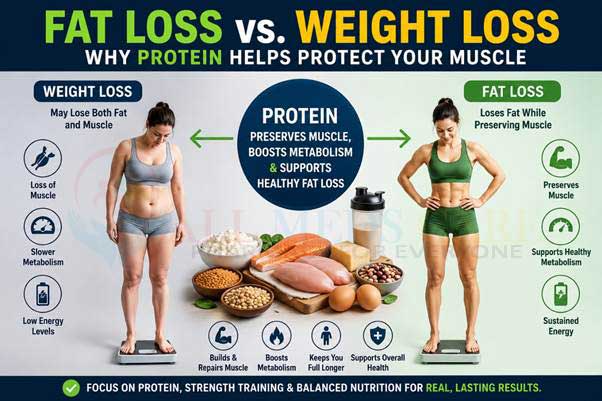
Need to know the real meaning of Fat Loss vs Weight Loss. For most people, when they begin a weight-loss program, their main focus is on the scale reducing. For the majority of individuals, one of the first things they consider when starting a weight-loss program is how the scale will change. But the numbers on the scale don’t necessarily tell the story. Weight loss is not weighting fat loss. Fat loss is when you lose excess body fat while maintaining lean muscle mass, whereas weight loss is a decrease in overall body weight.
This is important because as muscles are lost, so are the metabolism, strength, energy and weight maintenance. Consume adequate protein to maintain muscle tissue and to stimulate fat loss. Understanding this protein-muscle-preservation-to-fat-loss connection empowers you to become healthier and realize long-term results.
The Difference Between Fat Loss and Weight Loss.
Weight reduction is a reduction in the mass of the body. This goes down from several places, such as:
- Body fat
- Muscle mass
- Water weight
- Glycogen stores
For instance, someone on a very low diet can lose quite a bit of weight in a short period of time. But much of that loss may be from water and muscle, not fat.
Why Muscle Matters During Weight Loss?
Muscle plays a key role in the process of fat loss. Muscle tissue is essential to well-being and metabolism. It aids in movement, balance, strength and physical functioning. The most important is that muscle is an active tissue and requires energy, even when not involved in physical activity.
Extreme restrictions in calories can cause the body to break down muscle protein, which can help supply energy. As muscles lose weight, your body’s metabolism slows down, and it will be easier to lose additional weight in the future, and weight regain is more likely.
Loss of muscle can also cause:
- Reduced physical strength
- Lower energy levels
- Poor exercise performance
- Increased risk of injury
- Problems with sustained outcomes
This is why maintaining muscle is crucial in each weight loss program.
How Protein Helps Protect Muscle Mass?
Protein contains amino acids that repair and maintain muscles. If you are in a calorie deficit, you should keep your body properly supplied with dietary protein so that your body will have more incentive to retain the muscle tissue.
Protein is essential for muscle protein synthesis, the process of muscle repair and rebuilding. This is particularly relevant when in a weight loss phase, as the body is experiencing more nutritional stress.
People who eat higher protein diets are likely to lose less muscle mass than those who eat lower protein diets.
Protein also helps to preserve muscle tissue, reducing the amount of loss in precious lean tissue.
Protein + Fat Loss = A Great combination!
Protein has multiple benefits that help to support fat loss.
Increased Satiety
Protein has been shown to make people feel full. Foods high in protein can help curb hunger and help maintain a calorie-controlled diet.
When people are satisfied after eating, they don’t snack as much or overeat in the afternoon or evening.
Higher Thermic Effect of Food
Protein requires more energy to be digested than carbohydrates and fats. This is called the thermic effect of food, which results in a slight rise in calorie burn.
While the impact is small, it can be part of a fat loss regimen when coupled with a healthy eating plan and exercise routine.
Better Body Composition
Weight loss dieters tend to get a better body composition if they focus on eating protein. They aren’t just lighter; they lose fat while retaining muscle mass, leaving them stronger and leaner.
Here are some of the symptoms that could indicate that you may not be eating enough protein.
When many people are trying to lose weight, they are not getting the protein they need without realizing it.
Some indications of inadequate protein consumption may be:
- Persistent hunger
- Loss of strength
- Slow recovery after exercise
- Increased fatigue
- Difficulty maintaining muscle mass
- Plateaued weight-loss progress
When these symptoms are present, a diet history that includes protein intake might be helpful.
What are the Best Protein Foods to Eat for Fat Loss?
Opting for protein-rich foods that are packed with nutrients can contribute to the process of fat loss and also overall well-being.
Lean Animal Proteins
- Chicken breast
- Turkey
- Fish
- Eggs
- Greek yogurt
- Cottage cheese
Plant-Based Protein Sources
- Lentils
- Chickpeas
- Black beans
- Tofu
- Tempeh
- Edamame
- Quinoa
Some plant-based proteins are also rich in fibre, another factor that aids in a sense of fullness and gut health.
How Much Protein Do You Need?
Protein requirements are influenced by the age, weight, activity and objectives of a person.
The general estimate for people who are actively trying to lose fat but want to maintain muscle is around 1.2–2.0 grams per kg body weight per day.
For example:
- The amount of protein needed by a 70 kg (154 lb) adult is about 84–140 g a day.
Those who are doing strength training or regular exercise may require the higher end.
Combining Protein with Exercise
Protein is required, but should be used in addition to exercise.
The body is told to build muscle by weight lifting and bodyweight exercises (resistance training). Protein is what helps to preserve and repair that muscle.
Protein + strength training = a fat-busting, muscle-saving environment.
Common mistakes people make
Many people unwittingly hinder their fat loss efforts by:
- Focusing only on calorie reduction
- Skipping protein-rich meals
- Avoiding strength training
- Relying on crash diets
- Obsessing over scale weight rather than body composition
Instead of focusing on body composition, obsessing about scale weight. Obsessing about scale weight instead of body composition.
A lower number on the scale doesn’t always mean that things are improving. Finally, it is important to preserve muscle while removing fat from the body.

About John Davis
Healthcare Writer & Medical Content Author
John Davis is a content creator in healthcare with a career at AllMedsCare that consists of writing articles with knowledge for patients on pharmaceutical topics, health issues related to men and women’s health, sexual health during pregnancy, procedures, exercising, and... Read More
View all posts by John Davis


