
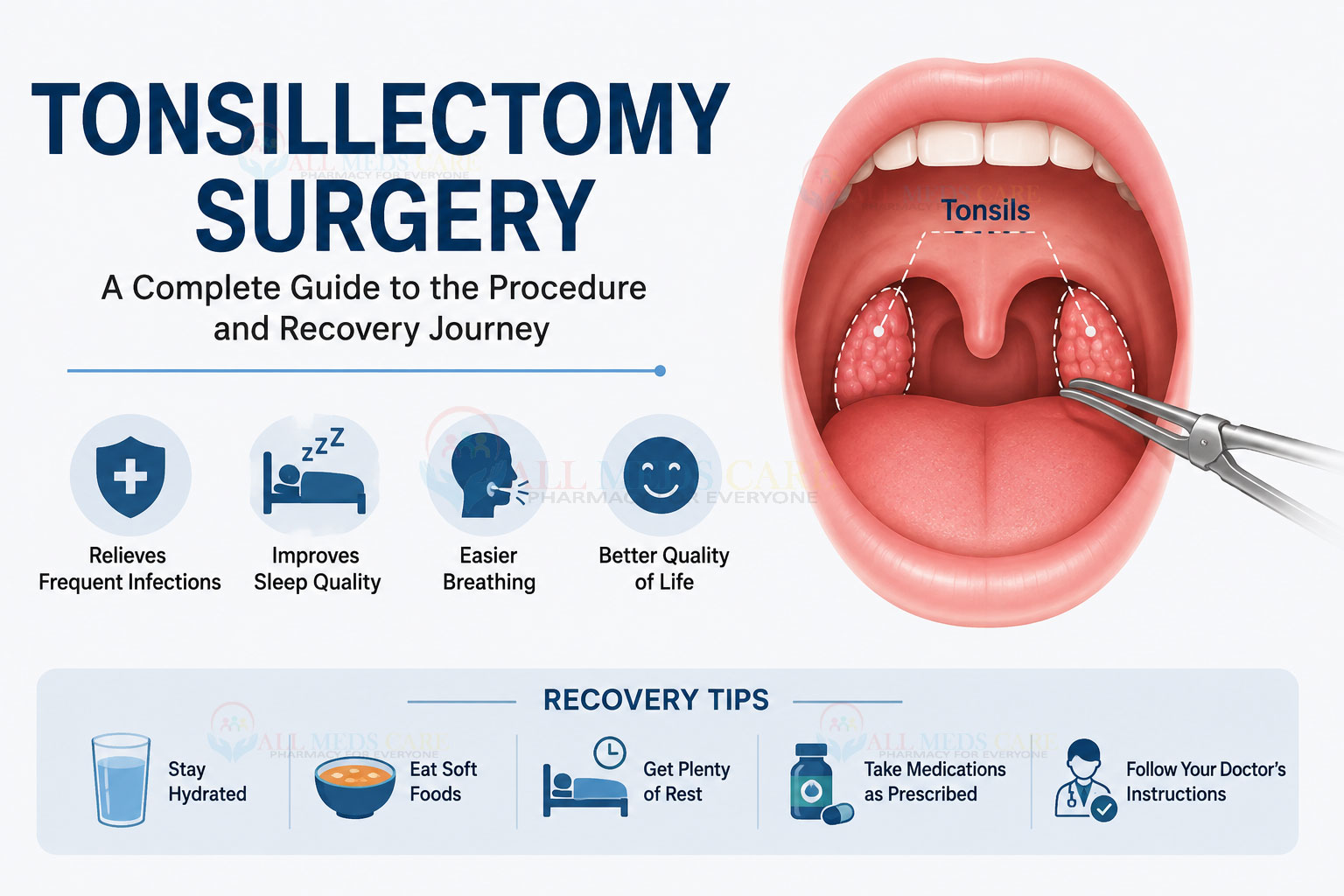
Tonsillectomy Surgery: A Complete Guide to the Procedure and Recovery Journey

The tonsils are small masses of lymphoid tissue in the back of the throat, which are part of the immune system. They are useful in identifying and reacting to germs inhaled into the mouth and nose. However, sometimes, the tonsils may become more of a problem than a solution when they are recurrent and persistent. In such cases, a tonsillectomy, in which the tonsils are removed, may be recommended by a doctor.
Tonsillectomy is one of the most frequently performed surgical procedures, not only amongst children, but adults too. Educating your patients about the reasons for the surgery, what to expect during the surgery, and the recovery process can help make them feel better prepared.
What Is Tonsillectomy Surgery?
Tonsillectomy is an operation during which a tonsil or both tonsils are taken out. This is typically done under general anesthesia – a condition where the patient is unaware of the procedure and is sleeping.
This surgery is usually used when tonsils have been causing frequent infections, serious breathing issues or when medical treatment is not effective.
While tonsils are a part of the immune system, tonsillectomy generally doesn’t affect normal immune function. Immune protection is maintained in other tissues of the body.
Why Might a Tonsillectomy Be Needed?
Surgery may not be necessary for all people who have enlarged or infected tonsils. Tonsillitis is typically recommended for removal only when a person’s symptoms are severe, and the frequency of infections and general health are taken into account.
Common reasons may include:
- Recurrent tonsillitis or throat infections
- Tonsils that are bigger than usual and obstruct breathing.
- Difficulty breathing during sleep or obstructive sleep apnea (OSA)
- Enlarged tonsils that cause difficulty with swallowing.
- Persistent tonsil-related complications
- Some abscesses/infections that keep recurring
- Enlarged tonsils that may need more medical attention
Children may have enlarged tonsils and adenoids that lead to sleep-disordered breathing at times. If this is the case, a detailed evaluation may lead to recommending surgery.
Preparing for Tonsillectomy
Before the surgery, the healthcare team will go over the patient’s medical history, medications, allergies, prior reactions to anesthesia, and the patient’s symptoms. Further testing might be suggested based on the person’s situation.
Before the surgery, patients should be instructed by the surgical team on what to eat, drink and take medications. Changes in some medications may be needed temporarily, but patients should not change doses of prescribed medications without consulting a health care provider.
Other items that are beneficial include having a safe place to sleep at home and getting home. There should be adequate fluids and soft foods available, which will make the first few days more manageable.
What Happens During the Procedure?
The patient is usually sedated for the surgery. After a person is asleep, the surgeon will take out the tonsils from the mouth and will not make an incision on the outside of the neck.
The techniques of surgery might vary based on the patient’s age, anatomy and the surgeon’s preference. This process usually takes a relatively short period of time, but preparation, anaesthetic, recovery and medical surveillance are all part of the time spent at the medical facility.
Once the surgery is complete, the patient is moved to a recovery room, where the patient’s breathing, heart rate, oxygen levels and other vital signs are constantly monitored.
In some cases, patients may be discharged on the same day, but in certain cases such as those with medical conditions or young children, they may require night-time observation before they are discharged home.
What to Expect After Tonsillectomy
The recovery rate is different for each person, but it is normal to experience pain in the throat following tonsillectomy surgery. Sometimes pain can worsen for the first few days after surgery before it gets better.
Ears, jaw or neck may also be painful. It is not necessarily an ear infection but may be due to the nerves in these areas having pathways that run through the ear.
Other temporary symptoms may include:
- Difficulty swallowing
- Reduced appetite
- Bad breath
- Mild nausea
- Changes in the voice
- A feeling of something being stuck in the throat
A whitish or yellowish film might develop at the tonsil removal area. This may be a natural part of healing but should not be taken as a sign of infection.
Eating and Drinking During Recovery
Hydration is key to recovery. Patients should take fluids as directed by their healthcare provider and follow their doctor’s recommendations.
During the initial recovery phase, it may be easier to consume soft, easily swallowed foods. This can be foods such as yogurt, mashed foods, soft pasta, smoothies or other foods recommended by the healthcare team.
Some people may find very spicy, acidic, rough or very hot foods to be irritating to the throat. Eating and drinking may gradually resume after the person has started to be able to swallow more.
Sometimes it is easier to feed them small amounts of food often, as they may not want to eat, as it might cause pain in their throat.
Tonsillectomy Recovery Time
Recovery time is about 1-2 weeks, depending on the age, health and natural healing strengths of the patient.
Children may get better somewhat quicker than grown-ups, and grown-ups can have a ton of discomfort in the throat on the way to recovery.
Patients should take it easy and refrain from heavy exercise until their health care provider has said they’re safe. A return to school, work, sport, etc. should be dependent on the progress in recovery and medical advice.
Complications can be minimised and healing maximised by following the post-surgical instructions carefully.
Possible Risks and Complications
The surgery is relatively common but, as with any surgery, there are risks involved with tonsillectomy.
Possible complications include:
- Bleeding
- Infection
- Dehydration
- Reaction to anesthesia
- Significant pain
- Nausea or vomiting
- Temporary changes in voice or swallowing
Post-tonsillectomy bleeding should be treated immediately. Advise patients/caregivers of what to do if bleeding occurs per surgeon’s recommendation.
Go to the emergency room if you experience heavy bleeding, shortness of breath, inability to drink water, symptoms of severe dehydration or other serious symptoms.
Tips for a Smoother Recovery
A few practical steps can make recovery more manageable:
- Follow medication instructions: Take pain-relieving medicines exactly as recommended by the healthcare provider.
- Stay hydrated: Regular fluid intake is important, especially when swallowing is uncomfortable.
- Get adequate rest: The body needs time and energy to heal.
- Choose comfortable foods: Begin with foods that are easy to swallow and progress to normal foods.
- Avoid strenuous activity: Please consult your surgeon before resuming exercise.
- Attend follow-up appointments: These visits allow the healthcare team to evaluate recovery and address concerns.
Life After Tonsillectomy
For people who have experienced frequent tonsillitis or breathing problems related to enlarged tonsils, successful surgery may lead to fewer throat infections or improved nighttime breathing. However, tonsillectomy does not guarantee that a person will never experience a sore throat again. Other infections and throat conditions can still occur.
The decision to undergo tonsillectomy should always be individualized. A healthcare professional can determine whether the potential benefits outweigh the risks based on the patient’s symptoms and medical history.
Surgery to remove the tonsils (tonsillectomy) can be helpful for individuals who experience frequent tonsil infections or who have problems breathing, swallowing, or sleeping due to tonsils. The surgery is typically simple, but recovery is a process that takes time, proper fluid intake, pain management, and following medical directions.
Education about the pre-, intra-, and post-surgical process can help relieve stress for patients and families. If you or your child are thinking about having their tonsils removed, talk with a trusted health care provider about why you want the surgery, what you hope to achieve, the risks of surgery, the recovery process and other options.

About John Davis
Healthcare Writer & Medical Content Author
John Davis is a content creator in healthcare with a career at AllMedsCare that consists of writing articles with knowledge for patients on pharmaceutical topics, health issues related to men and women’s health, sexual health during pregnancy, procedures, exercising, and... Read More
View all posts by John Davis


