
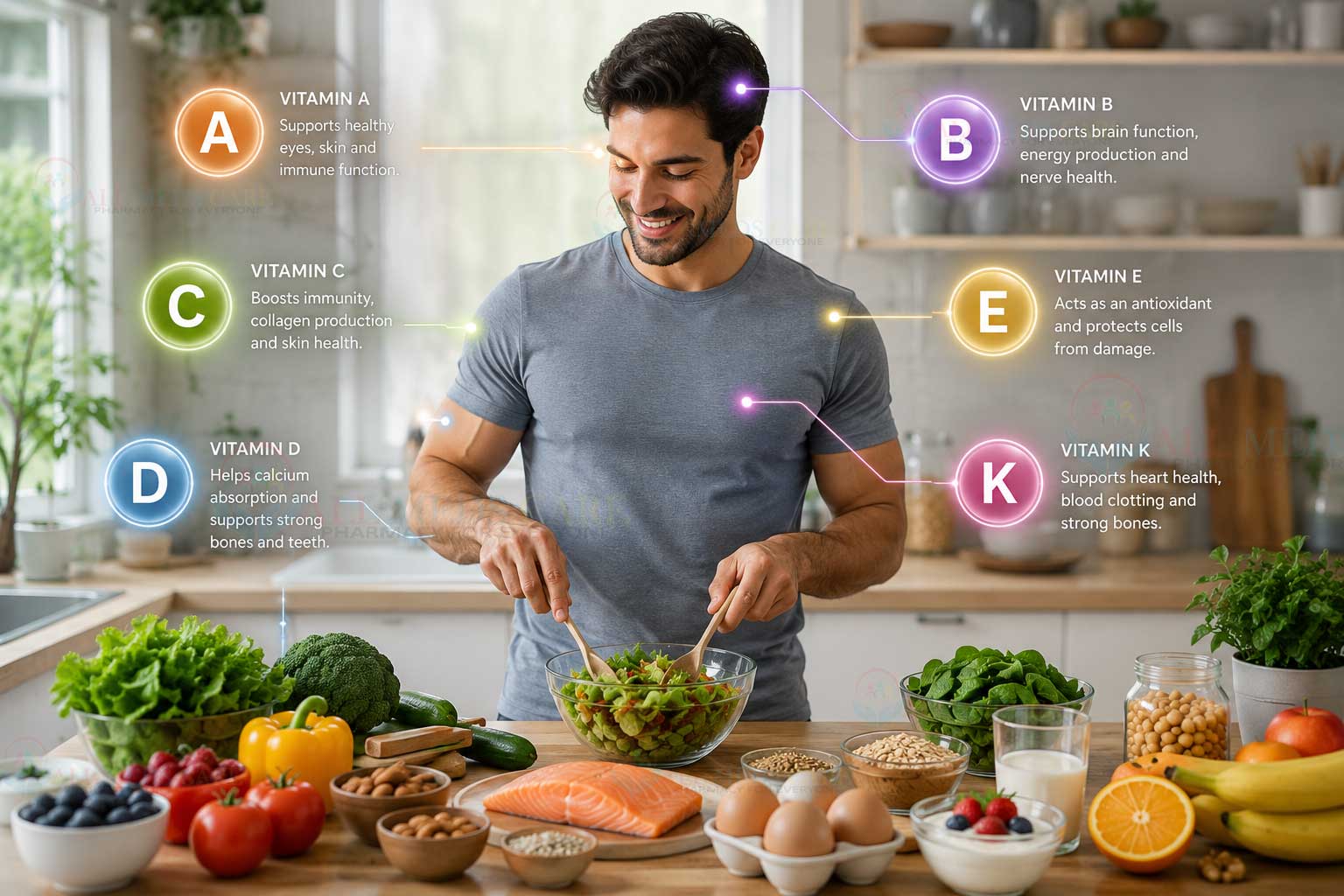
Your Body’s Daily Vitamin Checklist: What Each One Actually Does

Every Vitamin Has a Daily Job. Here’s What Yours Are Doing Right Now
Consider how many things your body does each day. The heart beats more than 100,000 times, the brain thinks of thousands of thoughts, muscles help to move, skin heals itself, and the immune system quietly fights germs.
Although the above sounds automatic, it is, in fact, dependent on a team of tiny but extremely important nutrients called vitamins.
In contrast to carbohydrates, proteins, or fats, vitamins do not provide calories and energy. However, vitamins play an important role in getting energy from food, repairing tissues, helping organs, regulating important chemical processes, and managing a number of different systems.
Fortunately, the body needs vitamins only in small doses. On the other hand, each vitamin cannot be synthesized by the body adequately, so it should be received through food or, in some cases, Vitamin supplements.
In this guide, we will provide a detailed description of each vitamin, its daily functions, food sources, and what happens if a person does not get enough vitamins.
Meet the Two Families of Vitamins
 Before proceeding to specific vitamins, it is beneficial to note the way they are grouped.
Fat-Soluble Vitamins
These vitamins dissolve in fat and can be stored in the liver and the fat of the body. They consist of:
- Vitamin A
- Vitamin D
- Vitamin E
- Vitamin K
As they are stored, there is no need for regular consumption of these vitamins. However, taking too much of these kinds of vitamins in the form of supplements might lead to their toxicity.
Water-Soluble Vitamins
These vitamins mix in water and are not stored in adequate amounts in the body. Any excess of these vitamins will normally be removed through urine. Thus, regular consumption is required.
This class covers:
- Vitamin B complex
- Vitamin C
Vitamin A: Helping You See, Heal, and Stay Protected
Vitamin A is commonly acknowledged for its importance in maintaining vision health but the responsibilities of the vitamin are much broader than just sight.
Daily functions of Vitamin A in your body
On a daily basis, Vitamin A helps with:
- Keeping our vision in order, especially under low lights.
- Supporting the body’s immune system
- Maintaining skin’s health
- Protecting the lining of the lungs as well as the intestines and urinary tract.
- Assisting the normal development and growth of cells
Good food sources
- Carrots
- Sweet potatoes
- Pumpkin
- Spinach
- Kale
- Eggs
- Liver
- Mangoes
Indicators showcasing low Vitamin A levels
If the deficiency lasts long enough, it can bring about:
- Difficulty seeing in the dark.
- Dry eyes
- Frequent illnesses
- Dry and rough skin
Vitamin B Complex: The Body’s Energy and Nerve Support Team
The Vitamin B Complex is a group of several vitamins working together to ensure the body’s processes are carried out properly rather than performing a single process.
The Vitamin B Complex includes Vitamin B1 (Thiamine), B2 (Riboflavin), B3 (Niacin), B5 (Pantothenic Acid), B6 (Pyridoxine), B7 (Biotin), B9 (Folate), and B12 (Cobalamin).
All these vitamins have different roles, but together they are responsible for energy production, brain health, functioning of the nervous system, production of blood cells, and metabolism.
The daily tasks performed by Vitamin B
Overall, B Vitamins help the body to:
- Transform carbs, fats, and proteins into energy
- Aid in the functioning of the brain
- Ensure the proper functioning of nerves
- Form red blood cells
- Create DNA and new cells
- Maintain healthy skin, hair, and nails
- Ensure the correct functioning of muscles
- Produce hormones and neurotransmitters
- Be responsible for the mood
- Support a healthy pregnancy with the help of folate
Highlights of each B Vitamin
- Vitamin B1 (Thiamine) maintains healthy nerves and muscles and facilitates the conversion of carbohydrates into energy.
- Vitamin B2 (Riboflavin) helps with energy production while ensuring healthy skin, eyes, and antioxidant processes.
- Vitamin B3 (Niacin) affects the functioning of the nervous system, skin health, and metabolism.
- Vitamin B5 (Pantothenic Acid) is essential for the production of hormones, fat metabolism, and the formation of coenzyme A, which participates in many processes at the cellular level.
- Vitamin B6 (Pyridoxine) boosts immune response, participates in the production of neurotransmitters, and is involved in the formation of red blood cells.
- Vitamin B7 (Biotin) aids in the breakdown of fat and carbohydrates and ensures healthy skin and hair.
- Vitamin B9 (Folate) is key to DNA production, the generation of new cells, and proper fetal development during pregnancy.
- Vitamin B12 (Cobalamin) is important for the healthy functioning of the nervous system, brain, production of DNA, and red blood cell formation.
Common food sources
- Whole grains
- Brown rice
- Oats
- Eggs
- Milk
- Yogurt
- Lean meat
- Poultry
- Fish
- Beans
- Lentils
- Chickpeas
- Nuts
- Seeds
- Spinach
- Broccoli
- Bananas
- Mushrooms
Who may be more likely to be in need of extra attention?
Various individuals could be at a higher risk of certain deficiencies relating to B Vitamins, such as:
- Older adults
- Pure vegetarians and vegans (especially for Vitamin B12)
- Pregnant women (folate)
- Individuals suffering from certain digestive disorders that impact nutrient absorption
Possible signs of deficiency
Depending on the B Vitamin which is absent from the system, certain signs may take place, including:
- Exhaustion
- Weakness
- Feeling tingling or numbness
- Difficulties concentrating
- Sores inside the mouth
- Colorless skin
- Low mood
- Anemia
Vitamin C: The Everyday Repair and Defense Vitamin
Vitamin C is among the most acknowledged vitamins for its significance in immune health. However, it has an important role in a variety of bodily functions.
Daily tasks
Vitamin C helps to:
- Produce collagen for healthy skin, blood vessels, and joints
- Aid in wound healing
- Safeguard cells from oxidative damage
- Enhance iron absorption from plant-based foods
- Enhance immune response
Rich sources of Vitamin C
- Oranges
- Lemons
- Guava
- Kiwi
- Strawberries
- Bell peppers
- Tomatoes
- Broccoli
Consequences of deficiency
- Bleeding gums
- Delayed wound healing
- Susceptibility to diseases
- Easy bruising
- Fatigue
Vitamin D: More Than Just the Sunshine Vitamin
Though sunlight is an important source of Vitamin D production in the body, there are many people, for various reasons, not getting enough Vitamin D.
Daily Function
Vitamin D plays a role in the:
- Calcium absorption process
- Maintenance of bones and teeth
- Healthy muscles
- Function of the immune system
- Communication between nerves
Food sources
- Fatty fish
- Egg yolks
- Fortified milk
- Fortified cereals
- Mushrooms exposed to UV light
Low Vitamin D levels can lead to:
- Bone weakness
- Muscle weakness
- Increased chance of breaking bones
- Bone pain
Vitamin E: Your Cells’ Protective Shield
Most importantly, the function of Vitamin E is that of an antioxidant, which protects cells from damage by free radicals.
Daily benefits of Vitamin E include:
- Healthy skin
- Immune function
- Cell protection
- Eye health
- Normal functioning of blood vessels
Food sources
- Almonds
- Sunflower seeds
- Hazelnuts
- Spinach
- Avocados
- Vegetable oils
When intake is too low
Vitamin E deficiency is uncommon, but it may lead to:
- Weakness of muscles
- Problems with vision
- Nerve damage
Vitamin K: The Vitamin That Helps Your Blood and Bones
Vitamin K may not be a vitamin that comes to people’s minds until they realize its importance in the blood clotting process. In fact, if the body lacks this vitamin, even minor wounds can result in major complications.
Daily functions
Vitamin K helps:
- Produce proteins for blood clotting
- Enhance bone strength
- Ensure bone metabolism is normal
Best food sources
- Kale
- Spinach
- Broccoli
- Brussels sprouts
Low intake may cause
- Frequent bruises
- Excessive bleeding
- Poor bone health over time
Can You Get All Your Vitamins from Food?
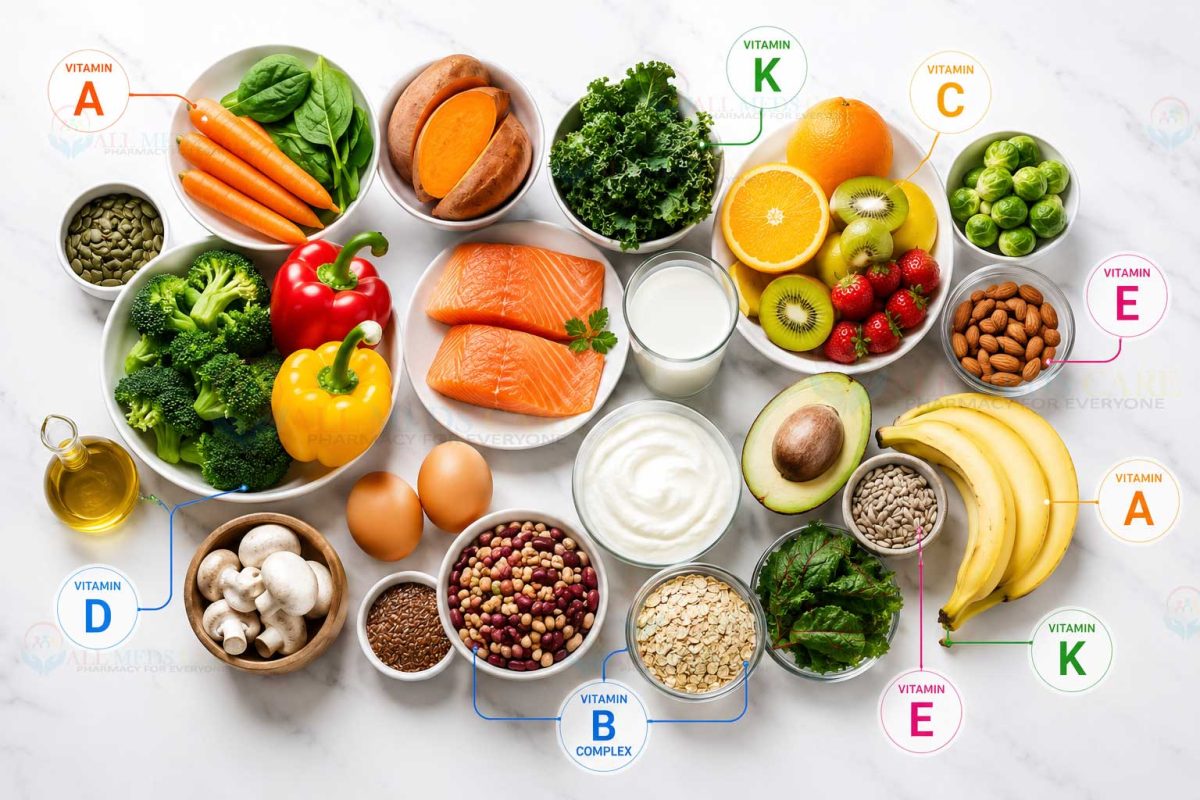
In most cases, the answer is yes.
By following a healthy, balanced diet with a variety of fruits, vegetables, whole grains, low-fat protein sources, dairy or appropriate substitutes, legumes, nuts, and healthy fats, all the body’s vitamins can be provided.
There are some cases when supplements are needed, including:
- Pregnancy
- Vitamin D deficiency
- Vitamin B12 deficiency
- Certain digestive problems
- Strict and limited diets
As a general rule, you should always consult your health care provider if you are thinking of adding a vitamin supplement to your diet which might result in high doses of vitamins leading to vitamin toxicity.
Simple Habits That Help You Meet Your Daily Vitamin Needs
You don’t have to complicate your nutrition plan to cover your vitamin intake. Just tiny habits applied regularly would suffice.
Try the following:
- Make sure half of the plate is filled with colorful fruits and vegetables.
- Include protein-rich food in every meal.
- Prefer whole over refined grains.
- Have greens sufficiently during the week.
- Consume nuts and seeds as healthy snacks.
- Spend enough time in the sun for the natural production of Vitamin D.
- Don’t overcook vegetables that might decrease the content of some vitamins.
- Eat different food rather than the same dishes all the time.
Small Nutrients, Big Impact on Everyday Health
Even if vitamins are required in small quantities, they have a very big effect on your health.
Among other things, they help in converting the food you eat into energy, and in addition to this, they improve your eyesight and strengthen your immune system, assist your bones in growing strong, and ensure your brain and nerves are working properly.
Each vitamin has its individual influence which is important for maintaining a healthy body.
Instead of thinking about one super vitamin, it’s better to think about them in terms of a team. When you often choose a varied healthy food, you make sure that this team has enough abilities to keep functioning as required. Also, it would be wise to get a grasp on the early signs of vitamin deficiency for better health.
FAQs
Q: Which vitamin is most important?
A: No vitamin can be deemed to be more essential than the others. Each vitamin carries out its unique function, and hence, it is crucial to consume all types of essential vitamins for good health.
Q: Do I need to take a multivitamin every day?
A: It is not necessary to get a daily dose of multivitamins, particularly if you already have a nutritious and varied diet, which already contains sufficient vitamins.
Professional consultation can guide in terms of the necessity of taking vitamin supplements if necessary.
Q: Which vitamins support immunity?
A: Many vitamins contribute to improving immune function such as Vitamin A, C, E, and D, as well as some B Vitamins.
Q: Can taking too many vitamins be harmful?
A: The human body can suffer from adverse effects of vitamins, especially fat-soluble vitamins. While taking excessively high vitamin doses, one should consider health risks. It is not recommended to take high vitamin doses unless directed by a specialist.

About John Davis
Healthcare Writer & Medical Content Author
John Davis is a content creator in healthcare with a career at AllMedsCare that consists of writing articles with knowledge for patients on pharmaceutical topics, health issues related to men and women’s health, sexual health during pregnancy, procedures, exercising, and... Read More
View all posts by John Davis


