
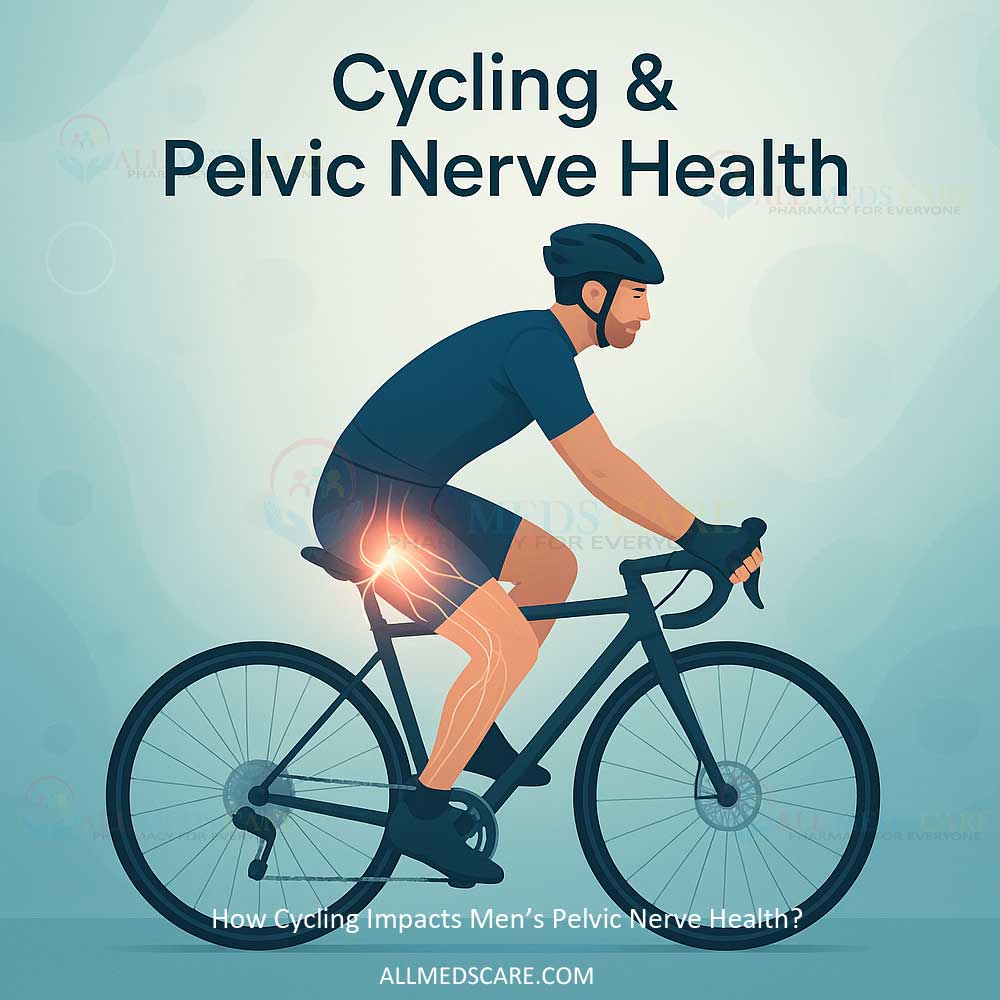
How Cycling Impacts Men’s Pelvic Nerve Health?

Men’s pelvic nerve health, What you put your body through when you are on a bike sitting in that same position for long periods can play a role in the health of the very sensitive nerve network in your pelvis. We get that this is a risk you may not want to hear but it isn’t to say you should give up what you love, instead we are saying ride smart to look after yourself better.
Cycling has grown to be a very accessible form of exercise world wide which in turn has seen millions of men join in which do so for the low impact cardio it presents. You see improved heart health, better results for weight management, and also better mental health from regular practice. Also you see a reduced risk of chronic disease and increased stamina from the activity.
Understanding Men’s Pelvic Nerve Anatomy and Function
The pudendal nerve is key to male sexual function and health. Pelvic Nerve which is a part of the sacral spinal cord (S2-S4) travels in the pelvic area where it splits to form 3 primary branches that innervate the penis, scrotum, perineum and anorectal areas. You use Pelvic Nerve for achieving and maintaining erection, ejaculation and pleasure during sex.
In addition to the pudendal nerve, men’s pelvic nerves also have the pelvic splanchnic nerves and the inferior hypogastric plexus. These networks which in turn run the function of the bladder, give sense to the rectum, and work with the pudendal nerve to prevent incontinence. The nerves which are related to sexual sensation are a connected system, should any part of the system get damaged it may affect your ability to achieve an erection, control urination, or feel normal in your genitals.
In the area where your body contacts the bike seat the perineum which has very delicate nerve networks just under the skin. Also because of the anatomic position of this area cyclists are very prone to injuries which may affect both sexual and urinary functions.
How Cycling Affects Men’s Pelvic Nerves?
During each bicycle ride the perineum which is the area between your scrotum and anus bears your body weight. In this region which is also very soft you will find the Pelvic Nerve and the key blood vessels which supply your genitals.
What you may not know is that with a traditional saddle you are putting all your weight on a very narrow part of your seat which in turn causes that area to bear that weight very intensely for the duration of your ride which in turn we see compression of these very sensitive structures.
Mechanisms of Cycling-Induced Nerve Compression
Cycling-induced Pelvic Nerve compression occurs through two primary mechanisms:
- Direct mechanical pressure on the pudendal nerve as it passes through Alcock’s canal
- Vascular compression that reduces blood flow to Pelvic Nerve tissues, causing ischemia
- Repeated vibration and impact forces transmitted through the saddle
Symptoms of Pudendal Nerve Palsy Cycling
Perineal pressure from cycling causes a series of recognized symptoms. Many reports from the cycling community of genital numbness which appears during rides and may last past the ride. You may notice tingling, sharp or burning pain in the perineal area, or a decrease in genital sensitivity.
These are signs of what is known as cycling induced pudendal nerve palsy, a condition which results from the damage of nerve function due to prolonged compression. Some men see quick resolution of these issues once they dismount, for others there are long term issues which in turn affect daily comfort and sexual function.
In some which there is large scale vascular compression for instance in some cases of cycling which is a known issue it may cause pudendal neuralgia a condition that presents with very painful symptoms in the pelvic area from pelvic Nerve damage.
Common Pelvic Health Issues in Male Cyclists
Genital Numbness
Genital desensitization that is reported by some cyclists goes from a brief tingle to full scale permanent loss of sensation. This is due to persistent pressure on the perineum which in turn compresses the Pelvic Nerve thus decreasing blood flow and the Pelvic Nerve’s ability to transmit signals. May notice this de-sensitation during long rides which last over 30 minutes or right away once you get off the bike.
Urethral Strictures
Urethral strictures may present as a result of repeated microtrauma to the urethra. A constant pressure and friction from the saddle seat causes inflammation in the urethral tissue which in turn may lead to scarring and narrowing of the urinary passage over time. Male cyclists that ride often without having proper saddle adjustment see an increased risk of developing these issues.
Erectile Dysfunction
Erectile dysfunction reports to be more common in cyclists which is by a factor of 4-5 in comparison to swimmers or runners. In terms of research which compares various sports groups, note that which male cyclists who log in at over 3 hours in the gym weekly see an increase in ED symptoms.
Also we see that the issue of the blood vessels being compressed and nerves irritated which in turn affects erectile function, which in many cases improves when the base issue of pressure is addressed via better equipment and riding technique. Treating erectile dysfunction nowadays have become a lot easier with medications like Aurogra, Kamagra, Cenforce and Caverta.
Factors Influencing Pelvic Nerve Impact While Cycling
The choice of equipment and how you set up your bike is to blame for the amount of pressure which is put on your pelvis during rides.
1. Saddle Design Impact
Saddle design is of primary importance, wide saddles with narrow noses present the most support which in turn reduces pressure on the perineum. Also we see that cut outs or grooves in the center of the saddle create voids which in turn minimize contact with the Pelvic Nerve. Also it goes without saying that the type of padding material is a factor; memory foam and gel insertions do a better job of absorbing vibration and shaping to the structure of the rider’s anatomy than traditional foam does.
2. Handlebar Height Cycling Posture
Handlebar height in cycling greatly changes what proportion of your weight is on the saddle vs the handlebars. If your bars are set very low you will lean too far forward which in turn puts more body weight on the front of your saddle and increases pressure on your perineum.
By raising your handlebars you change which weight goes to your arms and thus reduce the load on the sensitive nerve areas. This also changes your pelvic tilt which in some cases may be the difference between a comfortable ride and persistent saddle sores.
3. Bike Fitting Ergonomics
Bike fit ergonomics is a professional assessment issue as many variables come into play at the same time. We have certified bike fitters that measure your sit bone width, leg length, flexibility, and riding style to do it , to get optimal saddle height, fore and aft position, and tilt angle.
May think your set up is comfortable but small misalignments add up over the miles. Professional fitters use pressure mapping which we may not have access to at home to identify hot spots you don’t notice at first which in turn may cause pelvic Nerve damage over time.
Preventative Strategies to Protect Pelvic Nerve Health
Choosing the Right Saddle
Cycling injury prevention begins with choice of saddle, wide models which have short noses do a better job of distributing your weight across sit bones instead of putting too much pressure on the perineum. Also to consider are saddles which have central cut outs or channels that020 which break up contact with the sensitive Pelvic Nerve pathways. As for padding, you do want that to be adequate but also don’t go overboard as too much can cause instability and friction.
Investing in Quality Padded Shorts
Padded shorts, which is what we are talking about here, have a lot to offer beyond just comfort. We see in quality cycling shorts a chamois padding which has been put in strategic places to take in road vibration and at the same time reduce the friction between you and the saddle.
Also we have the seamless design which does away with chafing and the multi density foam which protects very sensitive areas without causing the material to bunch up during movement. You will notice the difference in these shorts after rides which go over 30 minutes.
Exploring Shock Absorbers Bike Seat Technology
Shock absorbers in bike seats are an added protective measure. We see in seat-post suspension systems which reduce the impact of rough terrain on your pelvis which in turn decreases the cumulative trauma during long rides. These devices take out vibration that would otherwise go straight to your saddle into very sensitive areas very useful for gravel riders and mountain bikers who are on rough terrain.
Behavioral Tips to Reduce Pelvic Nerve Pressure During Rides
Equipment changes alone don’t fix How Cycling Affects Men’s Pelvic Nerve Health, you also have to change your ride technique. Out of the options we have to improve that which is standing on your pedals which is the best at releasing perineal pressure you have. Also get out of the saddle every 10-15 minutes during long rides which in turn will get blood flow back to the compressed areas and will give your pudendal nerve a break.
Your posture at all times while riding has a great deal to do with which areas of your body bear the brunt of the pressure. Also during the ride you may change your weight around in the saddle, going from a forward, to a back, or side to side position which in turn will move pressure points around and which in turn will prevent any one nerve path from being under too much stress for too long. As you go up hills you naturally go forward, on the way down you move back. Also by consciously doing these weight shifts while on flat ground you will see the same protective results.
Changing out hand positions on the handlebars also changes your pelvic angle and pressure distribution. You’ll notice different saddle contact points when you go from the tops to the drops on drop bars, or when you shift between positions on flat bars.
Also pay attention to what you can do to prevent numbness on your ride. We have put together some simple tips which will improve your cycling experience and comfort.
Addressing Symptoms and Seeking Medical Help
It is important to note what is normal for you and what isn’t when dealing with pain from cycling. Should you have persistent numbness which lasts more than 24 hours after a ride, issues with urination, notice any changes in erectile function, or you’re still in pain in your perineal area it’s time to see a pro. Don’t dismiss these as just cycle related, they may in fact be indicators of Pelvic Nerve or blood vessel issues which will require medical attention.
Warning signs demanding immediate consultation:
- Numbness extending beyond your ride by several days
- Urinary hesitancy or weak stream developing after cycling sessions
- Progressive loss of genital sensation
- Pain during sexual activity or difficulty achieving erections
Perineal numbness care is a multi aspect field. We may be referred to a urologist or neurologist which will include an assessment of nerve function and also to rule out structural damage. For the cyclist we see a lot of muscle tension which develops from that which we call the riding position. Specialized therapists in this area work on to release that tension in the pelvic floor muscles, to improve blood flow and in the end to restore proper nerve function via targeted exercise and manual therapy.
If you experience ongoing numbness or performance issues after a proper bike fit, see a specialist. In regards to temporary vascular issues which come from pressure, some cyclists report that Cenforce helps, but also it is very important to address the root cause for long term pelvic nerve health.
Balancing Cycling Benefits with Potential Risks
Proper precautions see to it that the health benefits of cycling outweigh the risks in men’s health. We see that regular cycling brings about great cardiovascular health which in some studies reports a 50% reduced risk of heart disease. Also you will see improved metabolic function, better insulin sensitivity and success in weight management as you stay into it.
The issues with Pelvic Nerve health we have presented do not diminish the benefits of what we are putting forth. We see to it that you may improve your pelvic health by:
- Selecting appropriate saddle designs with cut-outs or channels
- Maintaining correct bike fit and riding posture
- Taking regular pressure-relief breaks during longer rides
- Wearing quality padded cycling shorts
These easy changes will see you reap the full health benefits of cycling, improved cardiovascular endurance, stronger leg muscles, reduced stress levels, and better mental health. You don’t have to choose between cycling and pelvic health, you’re at the same time improving both through what you put on and how you ride.
You may notice that you have health benefits in the great field of cycling as you at the same time protect your pelvic nerves through what you choose to do. Get yourself a well fitted bike out of which the saddle is ergonomic which in turn will reduce perineal pressure. Stand up when you are on the go for periods at a time which is also a relief. Wear high quality padded shorts and also change your posture often to even out your weight.
Safe pelvic health practices for men include awareness and action. If you notice persistent numbness, tingling, or changes in urinary or sexual function, see a health care professional right away.
In Cycling and Men’s Pelvic Nerve Health we strive to empower you to make better decisions about your equipment, riding technique, and know when to seek medical advice. Our goal is that your commitment to these protective measures will enable you to pedal toward better health for years to come.

About John Davis
Healthcare Writer & Medical Content Author
John Davis is a content creator in healthcare with a career at AllMedsCare that consists of writing articles with knowledge for patients on pharmaceutical topics, health issues related to men and women’s health, sexual health during pregnancy, procedures, exercising, and... Read More
View all posts by John Davis


