
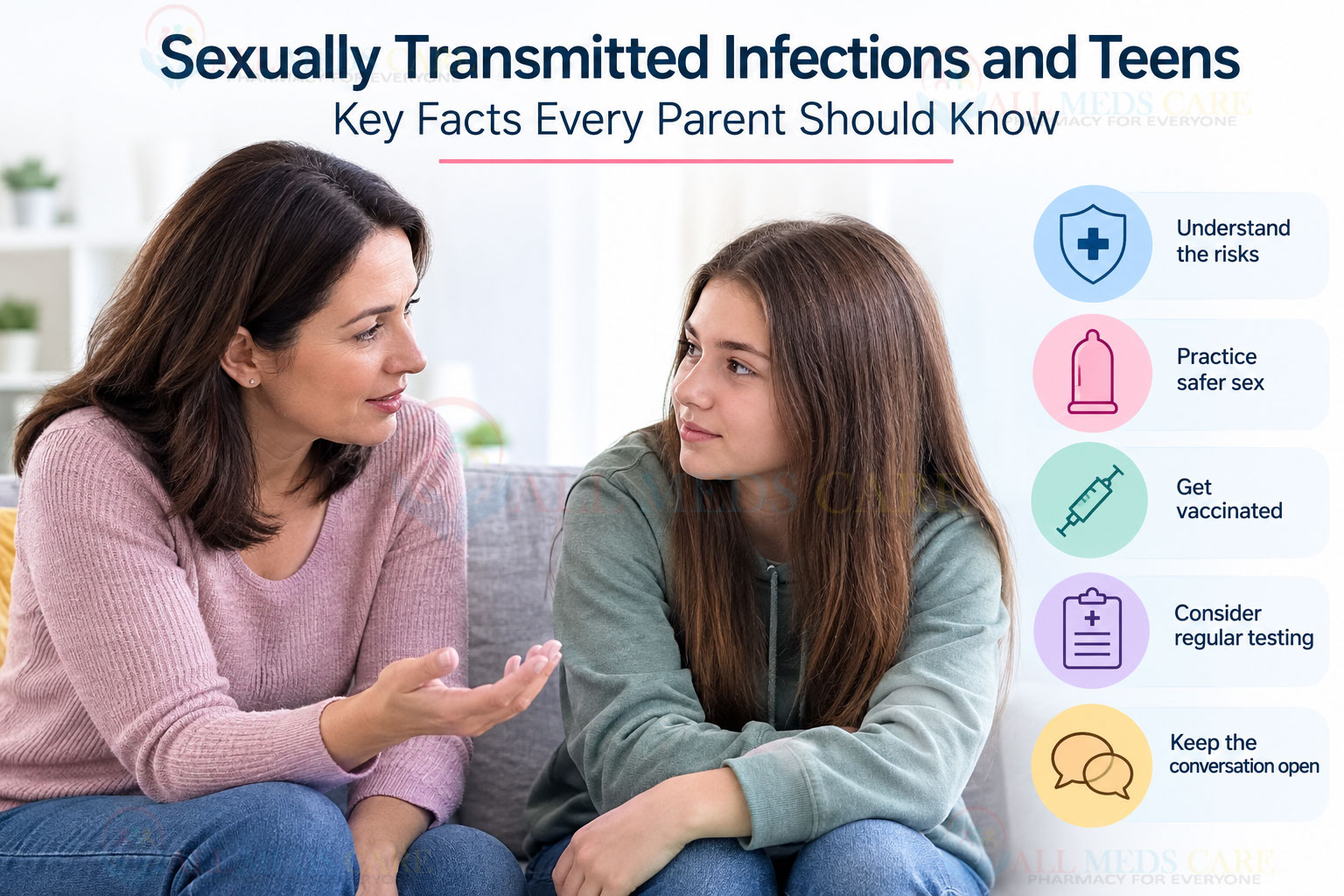
Sexually Transmitted Infections in Teens: What Every Parent Should Know and Discuss
As teens start to grow into adulthood, they experience a lot of changes in their physical, emotional and social development. Curiosity, peer pressure and independence can affect their relationship and sexual health decisions at this time. The subject of Sexually Transmitted Infections (STIs) is one of the most crucial issues that parents need to communicate with their kids. Open, honest and age-appropriate discussions are the most effective way for them to make informed decisions and reduce the risk of infection.
There are some parents who do not like to discuss this with their teens, but it is important to understand that teens are likely to be getting information from their peers or social media that may not be accurate. Factual, non-judgmental advice supports parents in giving their children opportunities to take charge of their health and to access health care services as needed.
What Are Sexually Transmitted Infections?
Sexually Transmitted Infections (STIs) are spread mainly through sex, such as vaginal, anal and oral sex. There are also cases where the infection can be spread from person-to-person or from a mother to her fetus while it is still in the womb during delivery.
STIs are a common occurrence among teens and young adults. A large proportion of the new cases of STIs reported worldwide are among young people aged 15 to 24 years. Public health groups indicate that young people, specifically those aged between 15 and 24, are a large proportion of new STI infections around the world. This is particularly the case when it comes to education and prevention during the teen years.
Common STIs include:
- Chlamydia
- Gonorrhea
- Human papillomavirus (HPV)
- Genital herpes
- Syphilis
- HIV
- Trichomoniasis
- Hepatitis B
Many of these infections are curable, and some are preventable by vaccines and safe sexual behaviors.
Why Are Teens More Vulnerable to STIs?
Teenagers are at a greater risk of STIs for several reasons:
- Limited Knowledge: Too many teens are getting partial and/or incorrect information about sexual health. Unsafe behaviours can be contributed to by misconceptions about pregnancy prevention, contraception and infection risks.
- Peer Pressure: An adolescent might feel pressured to have sexual relations before he or she is ready. They also might be reluctant to talk with a partner about protection.
- Inconsistent Condom Use: Condoms are an effective way to lower the risk for many STIs, but aren’t always used properly or consistently.
- Multiple Partners: The more sexual partners you have, the more risk of infection you put yourself at.
- Delayed Testing: Several STIs produce little or no symptoms. Adolescents may not be aware that they are infected and could pass the infection on to others.
Common Symptoms of STIs
The difficulty is the fact that numerous STDs have no obvious symptoms, particularly in the early stages.
When symptoms do occur, they may include:
- Pain or burning during urination
- Unusual vaginal or penile discharge
- Sores, blisters, or bumps around the genital or mouth area
- Pelvic pain
- Itching or irritation
- Pain during sexual activity
- Swollen lymph nodes
- Fever accompanied by genital sores
Infections may have significant health consequences even if the person does not show signs and symptoms.
Possible Health Complications
If the STI is left untreated, it may have long-term effects.
Potential complications include:
- Pelvic inflammatory disease (PID)
- Infertility
- Chronic pelvic pain
- Increased risk of HIV infection
- Pregnancy complications
- Certain cancers linked to HPV
- Damage to internal organs from untreated syphilis
Early diagnosis and prompt treatment have a significant impact on minimising these risks.
The Importance of Honest Parent-Teen Communication
Parents are an important factor in developing healthy attitudes towards relationships and sexual responsibility.
Do not have just one “big talk,” but rather, have continuous conversations that will grow with your child.
Some of the following will help with communication:
- Try to remain calm.
- Listen in greater proportion than talk.
- Encourage questions.
- Prescriptively use medically accurate information.
- Respect your teen’s Privacy.
- Talk about values in addition to health information.
- Make it OK for your child to ask for advice.
Teens who feel free to talk with trusted adults about sexual health are more likely to delay initiation and engage in safer sexual practices.
Prevention Strategies Every Teen Should Know
1. Practice Safer Sex
Many STDs can be prevented by using a condom and using it consistently and correctly. But condoms are not 100% effective against infections that are transmitted through the skin, including HPV and herpes.
2. Get Vaccinated
The following vaccinations are available for:
- Human papillomavirus (HPV)
- Hepatitis B
The best protection is to be vaccinated before exposure.
3. Regular Health Check-ups
Opportunities for education, vaccinations and screening (as appropriate) through routine medical visits.
4. STI Testing
Sexually active teens should know that they should expect to be tested as part of health care. Early detection = early treatment and prevention of transmission.
5. Limit Risky Behavior
Drinking and drug abuse may lead to poor judgment and make a person more likely to make risky sexual choices.
6. Know Your Partner
Rather than hiding away information about sexual activity and STI testing, communication about it can decrease the likelihood of risk.
Debunking Common STI Myths
Myth 1: Only People With Many Partners Get STIs
Fact: STIs are something that can be transmitted after a single sexual contact.
Myth 2: You Can Always Tell If Someone Has an STI
Fact: There are infections that show no symptoms.
Myth 3: Birth Control Pills Prevent STIs
Fact: Birth control pills prevent pregnancy but don’t offer protection from STDs.
Myth 4: Oral Sex Is Completely Safe
Fact: Herpes, Gonorrhea, syphilis and HPV are some of the STIs that can be transmitted via oral sex.
Myth 5: Young People Don’t Need STI Testing
Fact: Many infections go undetected for many months or years. Sexually active people are recommended to get tested regularly, according to a healthcare provider’s advice.
Recognizing Emotional Challenges
STIs can be a very difficult diagnosis for teens.
They may experience:
- Fear
- Shame
- Embarrassment
- Anxiety
- Depression
- Relationship stress
Parents should address parenthood issues with compassion, not blame. Emotional support helps teens to get treated and medical care.
When Should Parents Seek Medical Advice?
Parents should make an appointment for their teen to see a health care provider when their teen:
- Reports symptoms of an STI
- Has unprotected sexual contact
- Learns that a partner has tested positive
- Has experienced sexual assault
- Requests confidential sexual health advice
- Needs vaccination or screening
Confidentiality applies, and healthcare professionals can provide suitable testing, treatment and prevention.
Supporting Healthy Relationships
Just as important as infections is teaching teens about healthy relationships.
Encourage your teenager to understand:
- Mutual respect
- Consent
- Honest communication
- Personal boundaries
- Emotional readiness
- Respect for their own health and that of others
Healthy relationships are based on Trust, respect, and informed decision-making.
Creating a Safe Home Environment
Parents do not need to have every answer. What matters most is creating a home where questions are welcomed.
You can support your teen by:
- Sharing reliable educational resources
- Scheduling regular healthcare visits
- Encouraging responsible decision-making
- Respecting privacy while staying involved
- Reinforcing that seeking medical care is responsible—not embarrassing
Small, consistent conversations often have a greater impact than one lengthy discussion.
Helping Teens Build Lifelong Healthy Habits
Sexual health education is not only about preventing infections- it is about helping young people develop lifelong habits of responsibility, respect, and self-care. Teens who understand how STIs spread, how they can be prevented, and when to seek medical attention are better equipped to make informed choices throughout adulthood.
Parents should also emphasize that protecting sexual health is a shared responsibility between partners. Encouraging routine health checkups, respectful communication, and informed decision-making lays the foundation for healthier relationships in the future.
As your teen grows older, continue adapting these conversations to match their age, maturity, and experiences. Maintaining an open dialogue ensures they know they can always turn to you for trusted advice and support.
STIs continue to be a major public health problem, especially among teenagers and young adults. The conversation is not easy, but talking with your child about topics that might be uncomfortable to discuss can have a long-lasting impact. The risk of infection can be lowered through education, safer sexual behaviours, medical attention and open communication.
Rather than fear and stigma, parents should strike a balance between giving accurate information and encouraging responsible choices, and provide a supportive climate in which they can be unconditionally supported. Trust and understanding can help teens to successfully navigate their adolescent years, safeguard their health and create a solid base for a lifetime of wellness through the family.
This article is not meant to be a substitute for medical advice and should not be used as such. A qualified healthcare provider should provide individualized information and counselling about sexual health, STI screening, vaccination, diagnosis and/or treatment to parents and teens.