
Why Overtraining is the Silent Enemy of Immunity

The Fine Line Between Training and Overtraining
People keep on saying that exercise is among the best things to do for our health. It increases energy, lifts the mood, builds up muscles and aids the immune system. But what about the time when something that is supposed to be helpful to us begins to do the reverse instead?
This is where overtraining enters a situation that most people do not realize till such a situation starts to occur in their health. Overtraining is an invisible process in the background, unlike injuries that are visible and instant. Among its most threatening impacts, there is its slowing down of your body’s defence system.
It is a myth in fitness culture that the more you train, the better your output will be. Although it is important to be committed, the body does not operate like that. It needs balance.
Exercising causes stress in your body. This pressure is not bad in little measures; actually, it is a requirement to grow. However, this stress cannot dissipate unless one has sufficient time to rest.
Overtraining will start when your body does not have sufficient time to heal. Rather than strengthening, it begins to disintegrate.
Why Recovery Matters More Than You Think
Many people are so obsessed with Overtraining that they do not pay much attention to rest. The fact is that the actual improvement occurs once the workout is complete.
It is in the process of rest that your muscles are fixed and made stronger. Your body restores its energy reserves, and you will be back to a normal level. Your system remains in a state of strain without this period of recovery.
This constant stress puts various body systems under stress, including the immune system.
The Stress Factor: What’s Happening Inside Your Body
Any strenuous exercise is accompanied by a state of stress. This reaction involves the secretion of hormones such as cortisol that aid your body in coping with physical needs.
Under normal conditions, the level of cortisol increases when exercising and returns to normalcy post-exercising. However, in overtraining, the levels of cortisol remain higher.
In the long term, the excessive level of cortisol may disrupt the functioning of your immune system. Rather than reacting promptly to attacks such as viruses or bacteria, your body is slower and less efficient in protecting itself.
The Immune System Under Pressure
The immune system is dependent on the energy, balance, and good performance of various cells. When your body gets overworked, it begins to change its priorities.
It is not focused on the protection but on the regulation of stress and preservation of the simplest functions. Such a change makes you weaker in fighting infections.
This is the reason why over-trainers tend to observe:
- Frequent colds
- Sore throats
- Longer recovery from illness
- General feelings of weakness
Not only coincidentally, but it is a symptom that the immune system is not doing well.
The Role of Fatigue and Energy Depletion because of Overtraining
Exercise needs energy, and rigorous training consumes much energy. Lack of time to celebrate or even eat properly will decrease your energy supply.
The resources available in your body are therefore reduced towards other activities, such as immunity.
Imagine that it is a battery. When you continue to use it without a recharge, it is bound to run out. The same situation applies to your body. Your immune system is not able to work properly when the energy is constantly exhausted.
Sleep: The Missing Piece
Poor sleep is one of the least noticed consequences of overtraining. It is not as surprising as it may sound, but overworking your body can even complicate the process of rest.
You may be physically exhausted, yet you are mentally restless. It is hard to fall asleep, or you are waking up at odd hours.
It is during sleep that your body does some work that is vital to it. It secretes cells and proteins that assist in combating infections and normalizing the situation. This is interrupted without the appropriate sleep.
In the long run, insomnia leads to further corrosion of your immune system in the process, which can be very difficult to overcome.
The Psychological and Emotional Impact
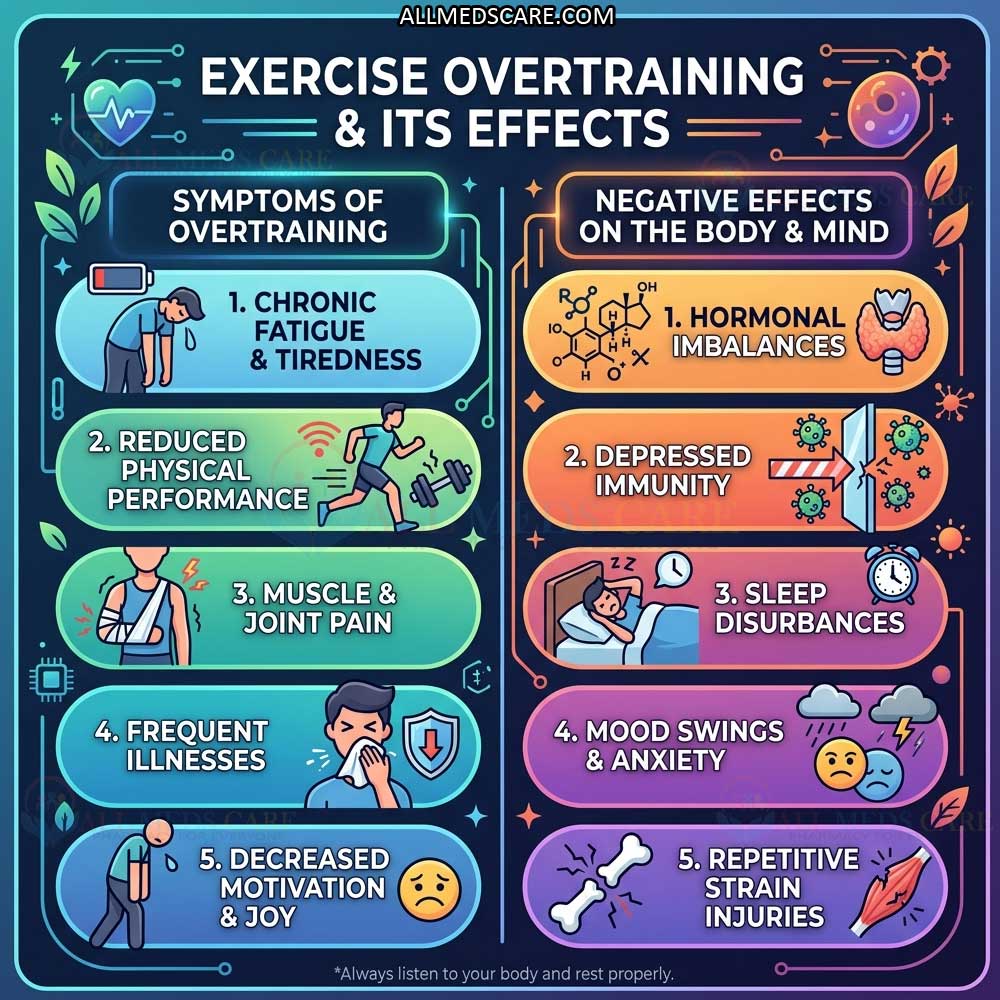
It is not just that overtraining is harmful to the physical well-being of the person, but also to their mental health.
You may start to feel:
- Irritable or easily frustrated
- Less motivated to exercise
- Mentally exhausted
- Disappointed with your performance
Such emotional shifts are likely to complicate the process of a healthy routine. As opposed to having fun in your workouts, they start seeing them as a liability.
This mental exhaustion is usually accompanied by physical exhaustion, and thus recovery would be even more crucial.
Recognizing the Warning Signs
The difficult aspect of overtraining is that it develops over time. It does not occur suddenly, and this makes it easy to ignore the signs at the beginning.
Some warning signs are common, such as:
- Constant tiredness, even after rest
- Decreasing performance despite regular training
- Persistent muscle soreness
- Trouble sleeping
- Getting sick more often
When you observe these trends, it may be time to take a step back and re-evaluate your schedule.
Why “Pushing Through” Can Backfire
In most of the instances, individuals react to fatigue by exercising more. They believe that they can rise above pain to achieve superior outcomes.
However, unfortunately, this usually complicates the situation.
In the situation where the body is already stressed, it is only making the situation more strained that will make the imbalance worse. Rather than becoming better, you become worse, and your health becomes poor.
Being able to listen to your body is not a form of weakness, but a smart and necessary component of long-term success.
Building a Balanced Approach
The point of avoiding overtraining does not imply avoiding work. It consists of developing that will not burden your body but enhance it.
A balanced routine includes:
- Intense workouts combined with lighter sessions
- Scheduled rest days
- Proper nutrition
- Adequate hydration
- Consistent sleep patterns
Through this balance, your body is able to adjust and be stronger without weakening your immune system.
The Importance of Rest Days
Rest days are misconstrued. Some consider them a waste of time or opportunities. The rest days are actually the days you get up to date. They enable muscles to rest, energy to rejuvenate, and the immune system to stabilize.
Even professional athletes have rest days in their rotas since they know that to be able to perform, they need to rest.
Long-Term Health vs. Short-Term Gains
It’s easy to focus on quick results, lifting heavier weights, running faster, or training longer. But true fitness is about sustainability.
If your routine leaves you constantly exhausted or frequently sick, it’s not helping you in the long run. Protecting your immune system should be just as important as improving your physical strength.
Final Thoughts
The phenomenon of overtraining is also referred to as the silent enemy of immunity due to the fact that the results of overtraining are not always immediately noticeable. It develops gradually, influencing your body in trivial ways until the effect becomes difficult to disregard.
Workouts are expected to help you feel stronger, healthier, and more energized, not exhausted and weak.
Through listening to your body, taking a break, and having a balanced schedule, you will be able to reap the rewards of fitness without jeopardizing your health.
Ultimately, it is not only about training harder but also about training smarter and remaining healthy to last as long as possible.

About John Davis
Healthcare Writer & Medical Content Author
John Davis is a content creator in healthcare with a career at AllMedsCare that consists of writing articles with knowledge for patients on pharmaceutical topics, health issues related to men and women’s health, sexual health during pregnancy, procedures, exercising, and... Read More
View all posts by John Davis


