
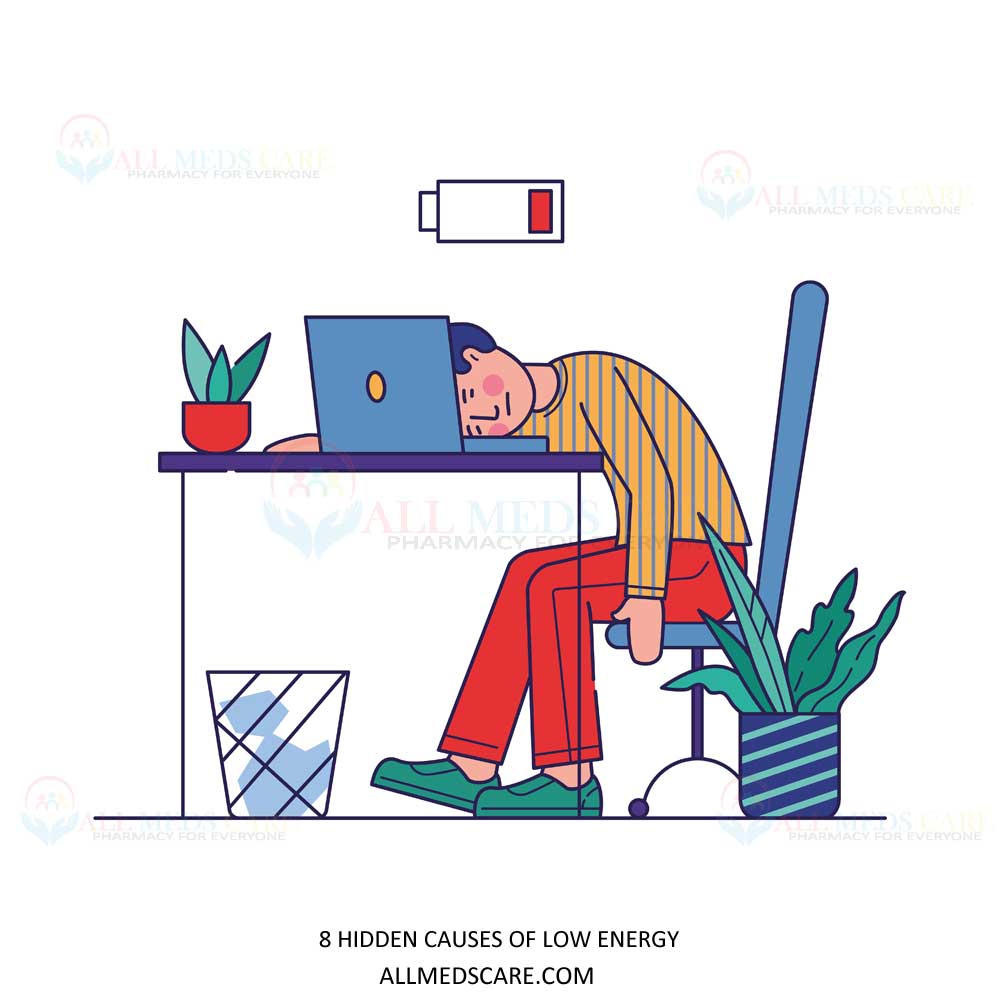

Low energy isn’t always a result of not getting enough sleep. Overlooking body signals from several daily habits, not compensating for nutritional deficiencies in our diet, or health issues that you are neglecting play a role in feeling tired all the time. Let’s look at the eight most common yet often missed causes of low energy and what you can do to boost your energy level.
Main Reasons of Low Energy Feeling
Blood Sugar Fluctuations
One issue that makes you tired all the time is an unstable blood sugar level. A high sugar breakfast or carbohydrate heavy lunch may give you an instant energy rush followed by a large energy dip. Out of these blood sugar fluctuations you may feel foggy, irritable, and tired all the time.
How to prevent it?
- Diversify your dishes with proteins, fiber, and healthy fats
- Don’t eat snacks that have high sugar content between meals
- Eating small portions of carbohydrate rich dishes and balanced meals is a good way to maintain sugar levels
Steady blood sugar levels are what you want for energy and sharp brain function which in turn helps to avoid the low energy issue.
Chronic Stress and Cortisol Overload
Stress is not purely a psychological issue. It affects the body too. Chronic stress leaves your cortisol levels raised, and that constant hormonal stress uses up your body’s resources. In the long term this may have you feeling tired all the time despite getting a full night’s sleep.
Symptoms to look out for:
- Difficulty falling or staying asleep
- Digestive issues
- Mood swings or increased anxiety
Preventive measures:
- Take short breaks during work hours at office
- Do deep breathing or short mindfulness sessions
- Reduce your caffeine consumption particularly in the evening
Managing stress is beyond just relaxation we are talking about restoring your natural energy balance.
Nutritional Deficiencies
A perfect diet does not always mean your body is getting what it requires. Iron, vitamin D, Vitamin B12, and magnesium are key in terms of cellular energy production. Even mild deficiencies of these can lead to persistent low energy.
What action to take:
- Run some blood work to check for deficiencies
- Increase your intake of iron rich foods like spinach, lentils, and lean meats
- In case you’re not getting out much under the sun, consider vitamin D supplements
If you are tired all the time and do not see a good enough reason for it, get your nutrient levels checked.
Poor Sleep Quality
It’s not the issue of how much sleep you get but how restorative that sleep is. You may be in bed for 8 hours and still wake feeling fatigued if your sleep is not a deep one, disrupted, or had at the wrong time.
Common causes of poor sleep:
- Blue light from screens before bed
- High stress or racing thoughts
- Late night eating or caffeine
How to improve it:
- Establish a consistent bedtime routine
- Avoid screens 1 hour before sleeping
- Use dark curtains or white noise to improve your sleep environment
Improving your sleep quality can have an almost immediate effect on reversing the low energy problem during the day.
Dehydration
Even slight dehydration can greatly reduce energy levels, concentration, and physical performance. If you are tired all the time, dehydration could also cause headaches or dizziness too.
How to avoid it:
- Aim to drink 8 – 10 cups of water daily
- Increase your fluid intake when you drink coffee or when exercising
- Adding foods such as bananas, coconut water to the diet is recommended
Hydration is an often underestimated solution to low energy, and it’s easy to fix.
Sedentary Lifestyle
Getting sufficient rest is vital for maintaining good health, but it becomes concerning if one has too much rest sitting or being inactive in turn causing poor circulation of oxygen, weak muscle development, and poor posture. All of that contributes to leaving you with low energy and feeling tired all the time.
What to do:
- Walk or stand for 5 minutes each hour
- Try out some stretching or yoga in the morning
- Take a walk after meals
Movement increases blood flow and also releases happy hormones i.e., dopamine, serotonin, endorphins, and oxytocin making you feel less tired throughout the day.
Gut Health Imbalance
Your stomach is also home to a diverse community of microbes that play a key role in the production of neurotransmitters and the inflammatory response. Disruption of that microbial community can result in poor nutrient absorption and chronic fatigue.
Signs of imbalance:
- Bloating, gas, or irregular bowel movements
- Sugar cravings
- Frequent fatigue after eating
Ways to improve Gut health:
- Add to your diet probiotic rich foods like yogurt, kefir, and kimchi
- Add fiber with fruits, vegetables, and whole grains
- Avoid excessive sugar and processed foods
Improving gut health leads to better digestion, clearer thinking, and more stable energy.
Underlying Medical Conditions
If at the end none of these apply to you but you are still very tired all the time, it may be a good idea to talk to a healthcare expert. Conditions that include thyroid dysfunction, sleep apnea, insulin resistance, or chronic fatigue syndrome can be the cause of constant low energy as well.
When to consult a doctor?
- Persistent fatigue for over a month
- Dizziness, weight changes, or irregular heartbeat
- Trouble concentrating or completing daily tasks
Don’t put off seeking help. Getting to understand the root cause of your low energy may reveal a treatable medical condition.
Tired All The Time? You’re Not The Only One, But It’s Not Normal
Feeling tired all the time every day because of a hectic lifestyle doesn’t mean it is inevitable. In fact it is often a warning sign your body needs help and it is something you should pay attention to.
Ready to take charge of your health and energy? Begin with easy daily changes and pay attention to what your body is telling you. If you’re still tired all the time, do seek out a professional. Everyone deserves to feel happy and alive every day.

About John Davis
Healthcare Writer & Medical Content Author
John Davis is a content creator in healthcare with a career at AllMedsCare that consists of writing articles with knowledge for patients on pharmaceutical topics, health issues related to men and women’s health, sexual health during pregnancy, procedures, exercising, and... Read More
View all posts by John Davis


